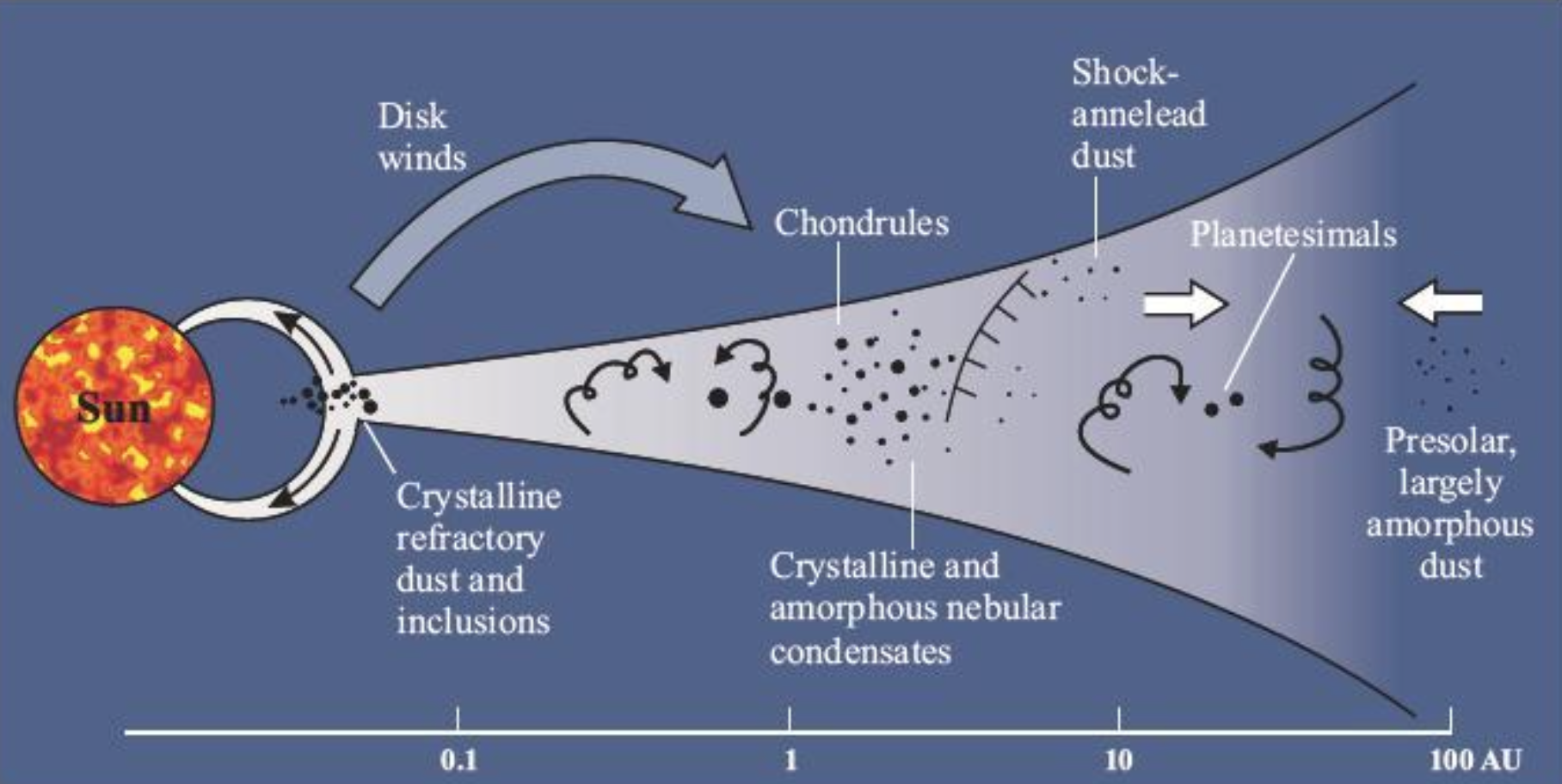
Meteorites
Meteorites are the oldest and least altered material from the early solar system, and because of this they form the record of the solar system formation.
They can be Stone (silicates), Stony iron or Iron and can be differentiated or undifferentiated.
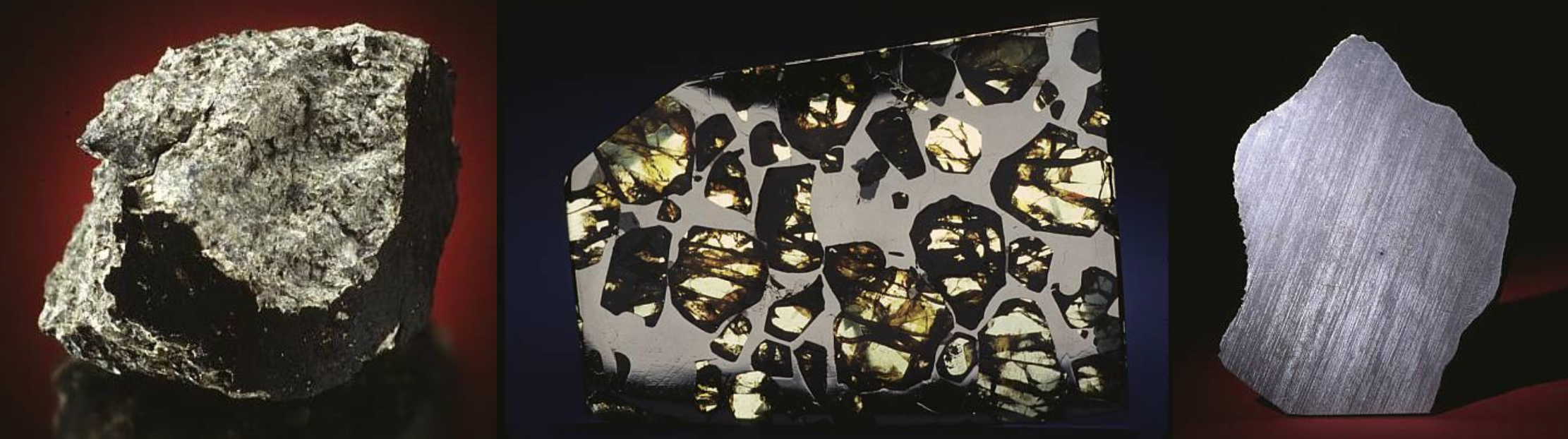
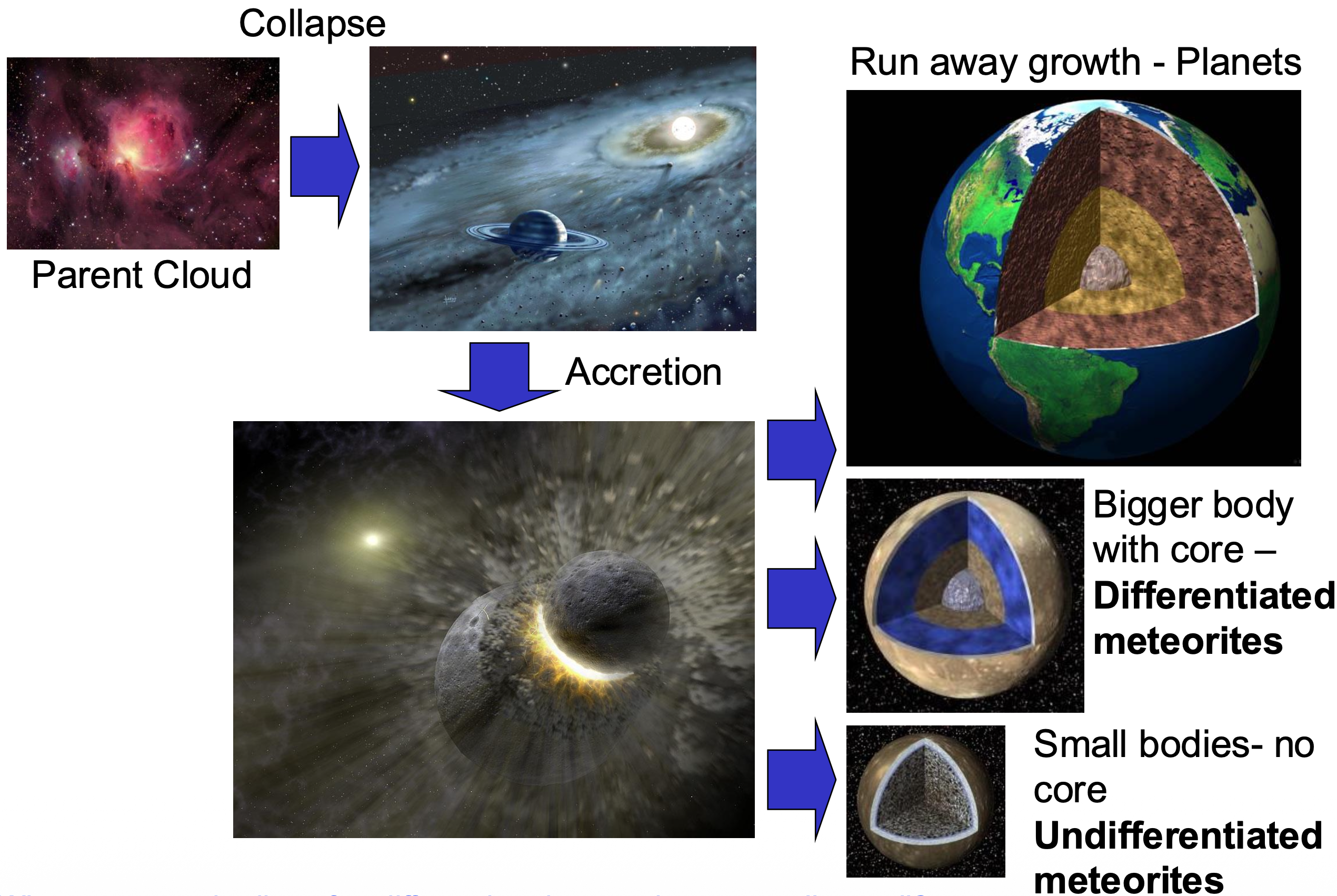
Differentiated meteorites come from a differentiated asteroid, that already has formed a Fe-Ni core and is then broken up. These provide information about the processes of planetary differentiation and magnetism.
There are also chondrites "cosmic sediments", which is material from before the planet formation and this reflects dust from the solar nebula. They come from object that have never been differentiated.
Meteorite Classification
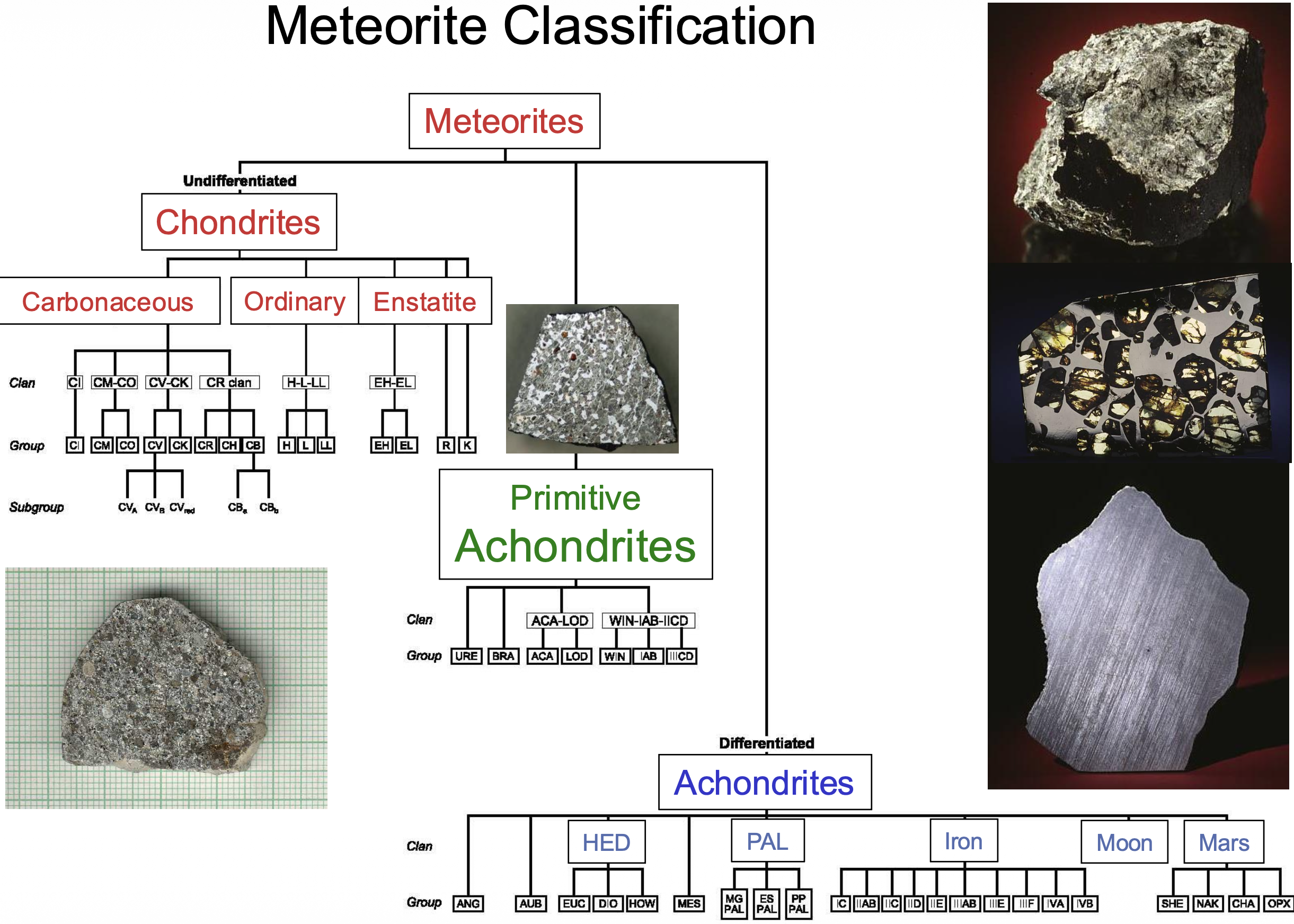
Undifferentiated Chondrite:
- homogeneous
- distribution of fine metals and silicates
Differentiated meteorites:
- Separation of metal (iron meteorites)
- and silicates (achondrites)
There are special cases like Pallasites or Mesosiderites.
Chondrites
Nebula dust compacted into a rock. They have spherical chondrules and also solid metal (Ca-Al-rich) inclusions. The matrix that hold everything together is a FeO-rich phase (Olivine and Pyroxene)
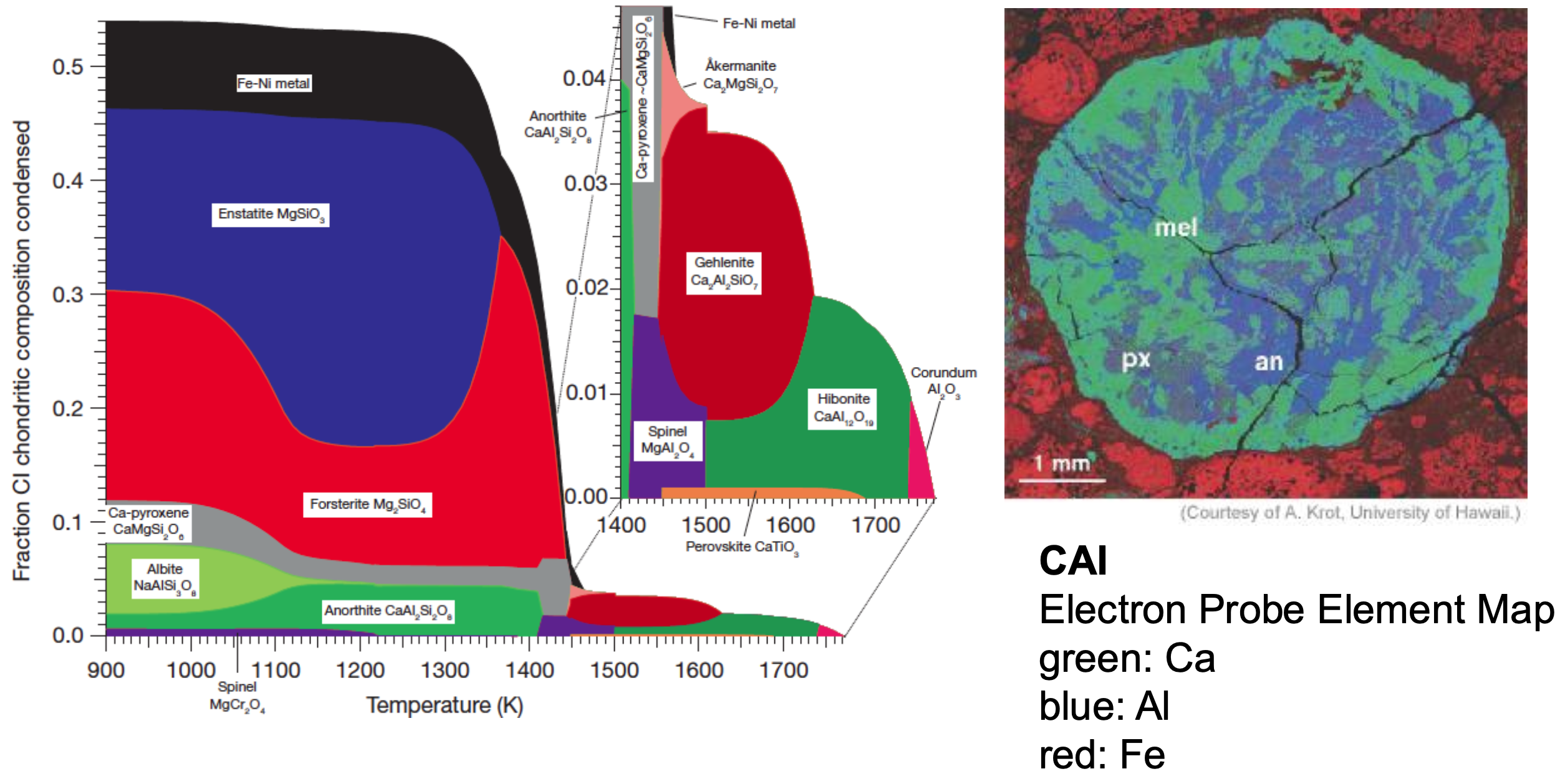
Condensation Sequence
Chondrules
These are crystallized from a melt under rapid cooling (10-2000 K/h). They can contain glass and are not strongly depleted in moderately volatile elements (Na, Mn, etc.). They were therefore surrounded by gas. The highly volatile elements were lost.
The current most accepted process of the formation of chondrules is that nebula shocks from e.g. outburst of the young sun, compress and heats the dust grains and so generates the local very hot events that cool of quickly.