Rocked Equations and propulsed Dynamics
Rocket equation (Tsiolkovsky equation)
A rocket needs fuel to push itself forwards. If we want to take more payload, we also need more fuel, but the additional fuel is also more weight, so we need more fuel for the fuel, and then more fuel for this fuel, etc.
This comes all together in the rocket Equation:
change in velocity induced by the propulsion system exhaust velocity of the gas in the propulsion system initial mass final mass
The difference betweenand is the mass of the used propellant .
Inverse (needed propellant for a
Orbit Insertion
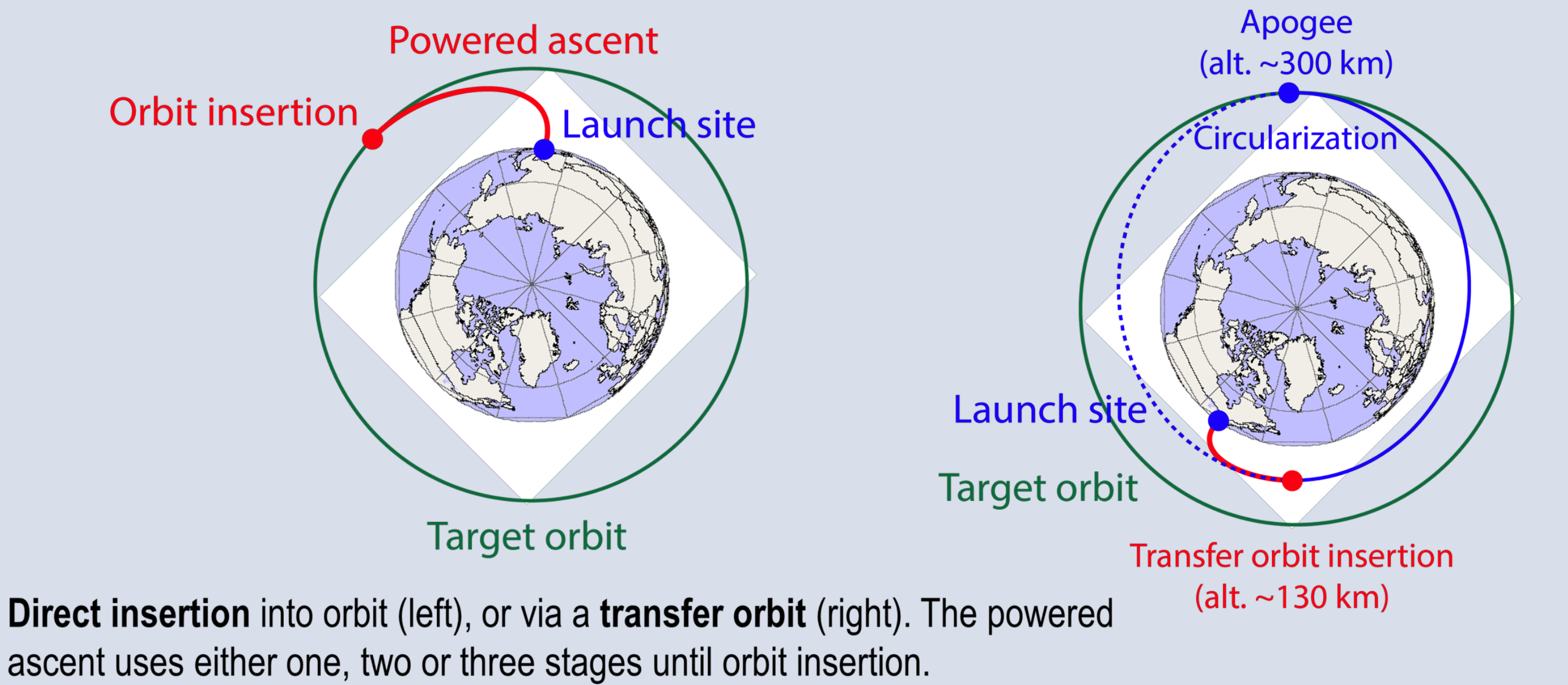
From the ground, a rocket needs to get to the necessary height, but also the necessary speed to stay in orbit. One could do a direct orbit or go over a transfer orbit. To get to speed, it also helps to use the speed of the earth and start in the direction of the earth's rotation.
Inclination
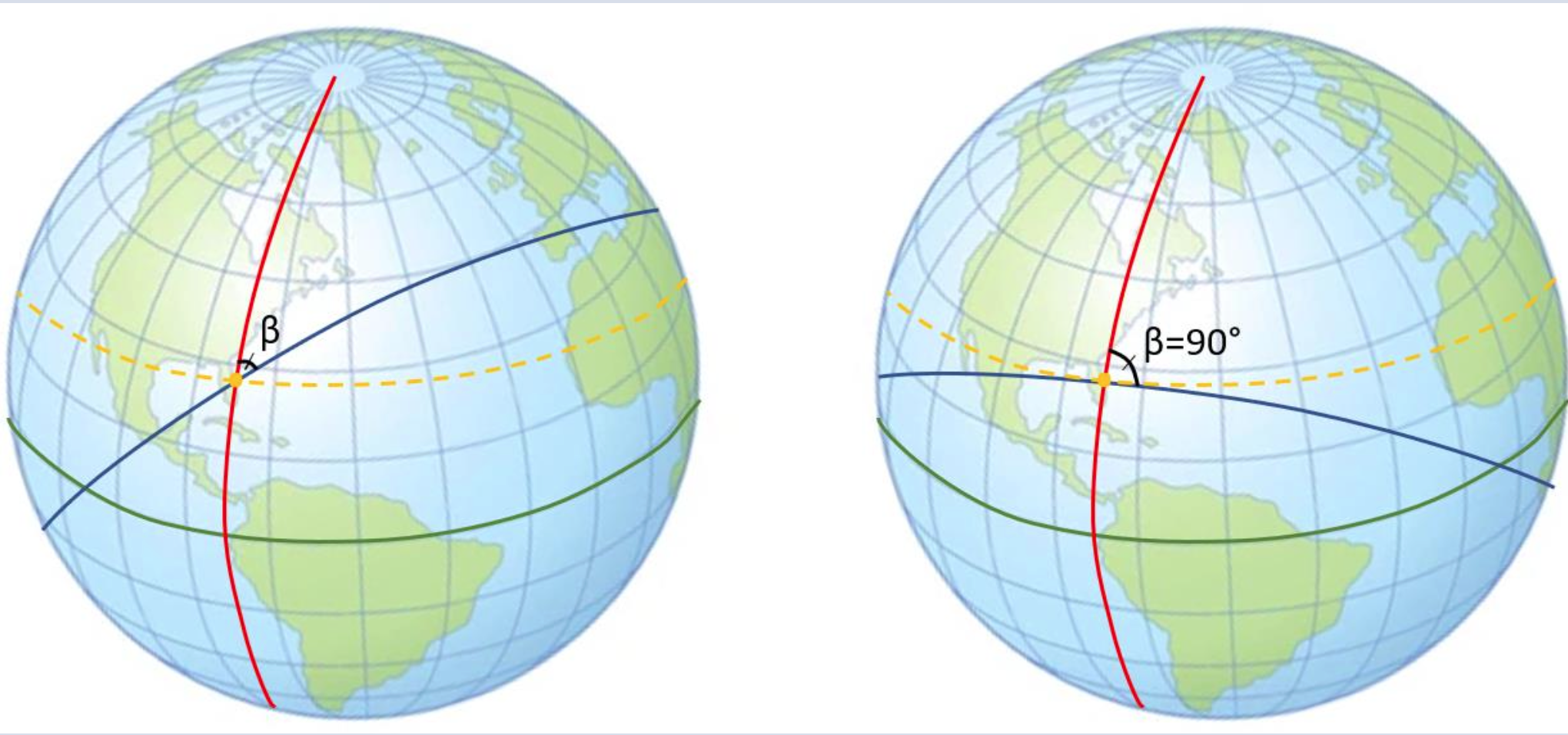
The lowest inclination orbit that can be achieved from a launchpad is restricted by its latitude. At a latitude of 5° the lowest inclination possible is also 5°.
Losses during ascent
On the way to space there are losses that need to be accounted for, there is a gravity loss and a drag loss.
is the drag in Newton Flight path angle (angle between velocity vector and the local horizon)
Drag and Ballistic Coefficient
: Aerodynamic drag force : Deceleration caused by drag : Atmospheric density : Velocity of the rocket relative to the atmosphere : Drag coefficient : Cross-sectional area normal to the flow : Instantaneous mass of the rocket : Ballistic Coefficient, defined as
: Ballistic Coefficient (measured in kg/m²) : Instantaneous mass of the object : Drag coefficient (dimensionless shape factor) : Cross-sectional area normal to the direction of flow
Orbital Maneuvers
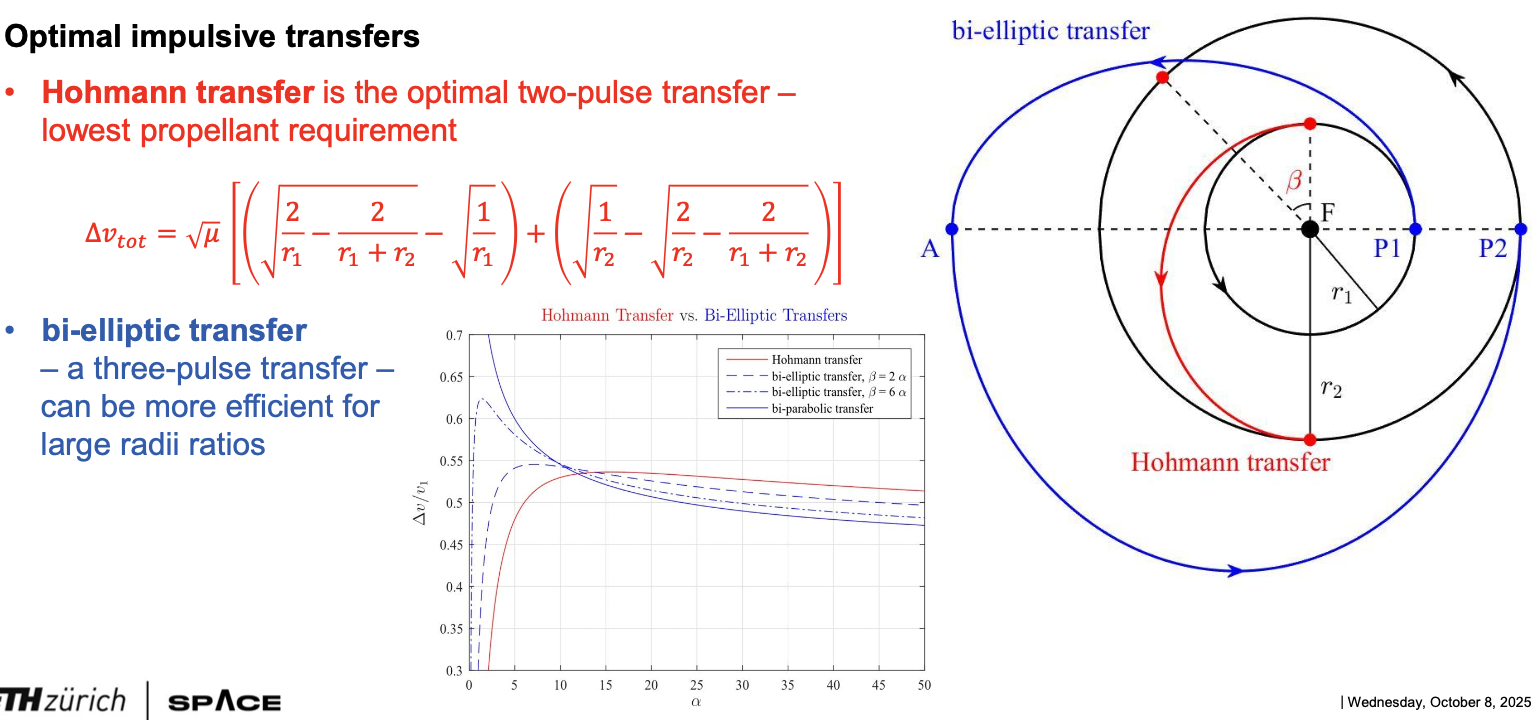
Impulsive Orbital Maneuvers
More to
Gravity Assist Maneuver
This utilizes the gravity of a planet and its relative movement around the Sun to obtain a velocity change. This can accelerate, decelerate or change plane, or can be also augmented by aerobreaking or firing of the engines at closest approach.
Rendezvous in Space
Two objects in orbit but with different radii have different speeds. For one orbit there is a rough formula to calculate how a difference in radius correlates to a difference in horizontal position after one orbit.
The same can be done for circular/close elliptical orbits:
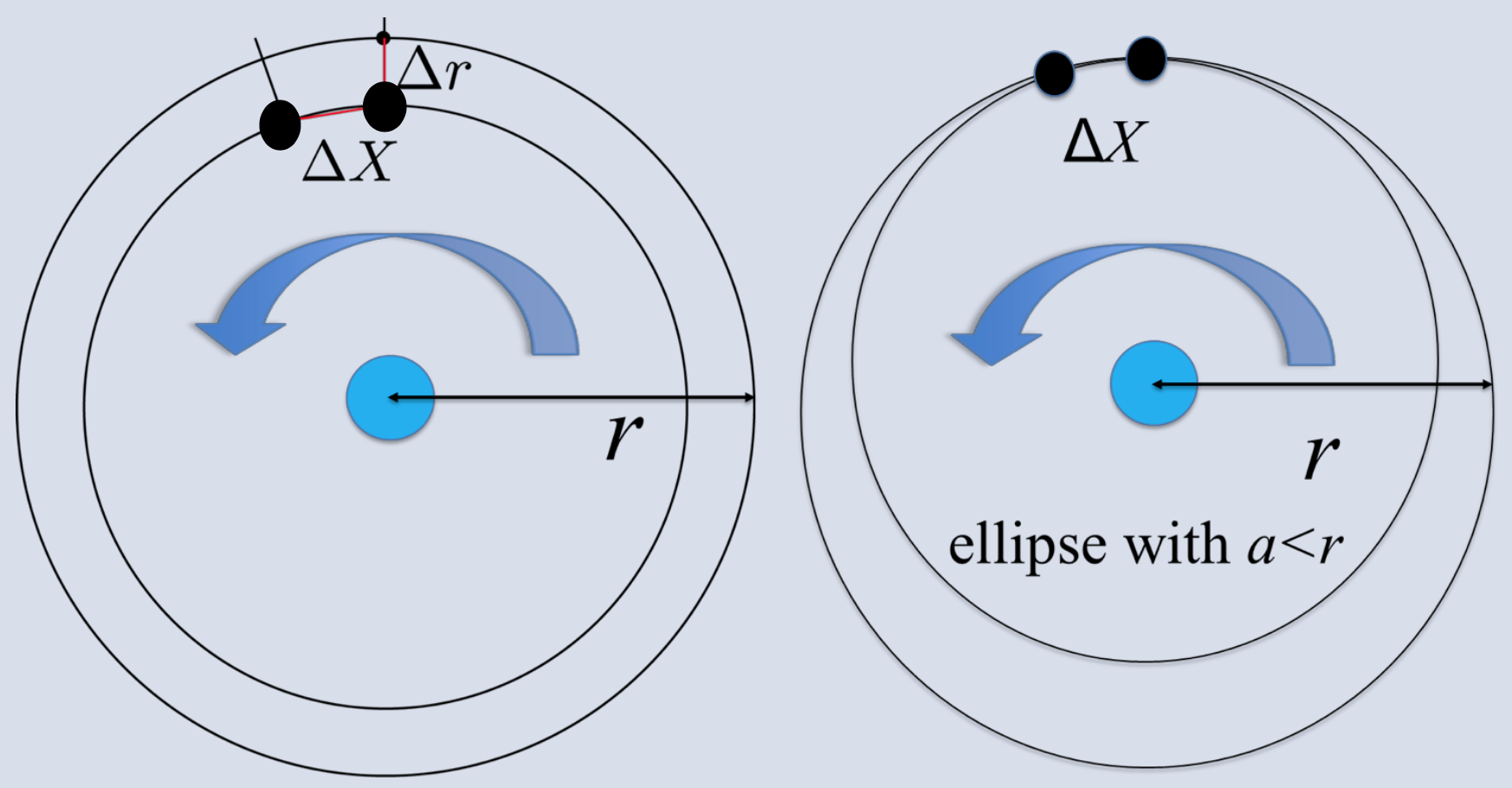
Depending on what the orbit of a chaser is, the relative movement of a chaser to target can be widely different. Some of these are shown in Target and Chaser Orbits.
Orbit Selection
Choosing the correct orbit is a trade-off that often has to be done in Space Mission Engineering.
The Orbit cost is mainly based on the needed