Structure of the Earth and Chemical Characteristics of Crust, Mantle, Core
Overview
The Earth is a chemically differentiated planet, divided into three primary layers:
- Crust – thin, low-density, enriched in incompatible elements
- Mantle – thick, silicate-rich, Mg- and Fe-dominated
- Core – metallic Fe-Ni alloy with lighter elements
These layers formed during early planetary differentiation, primarily through metal–silicate segregation and subsequent crust–mantle differentiation.
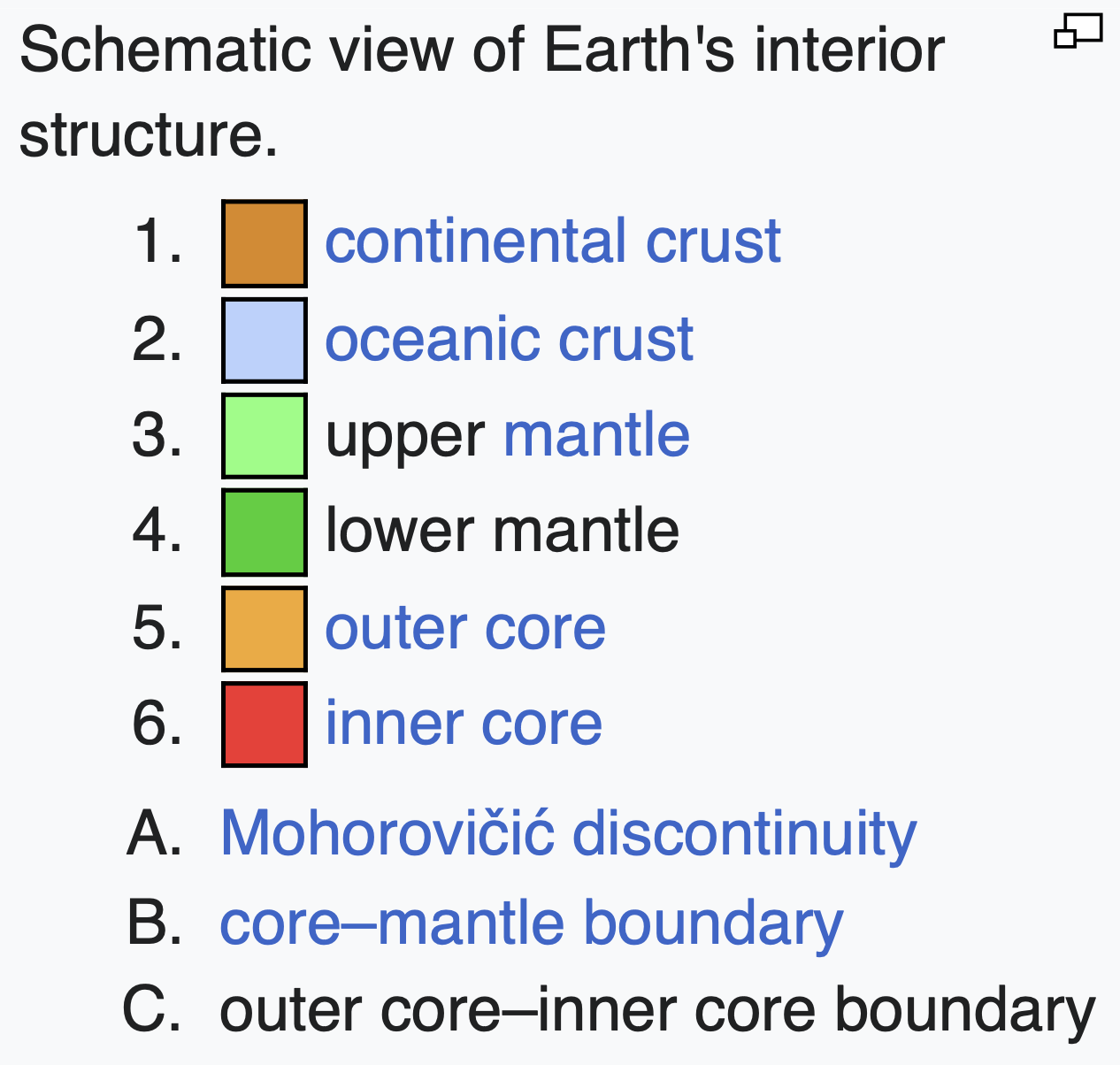
Earth is made up of multiple layers:
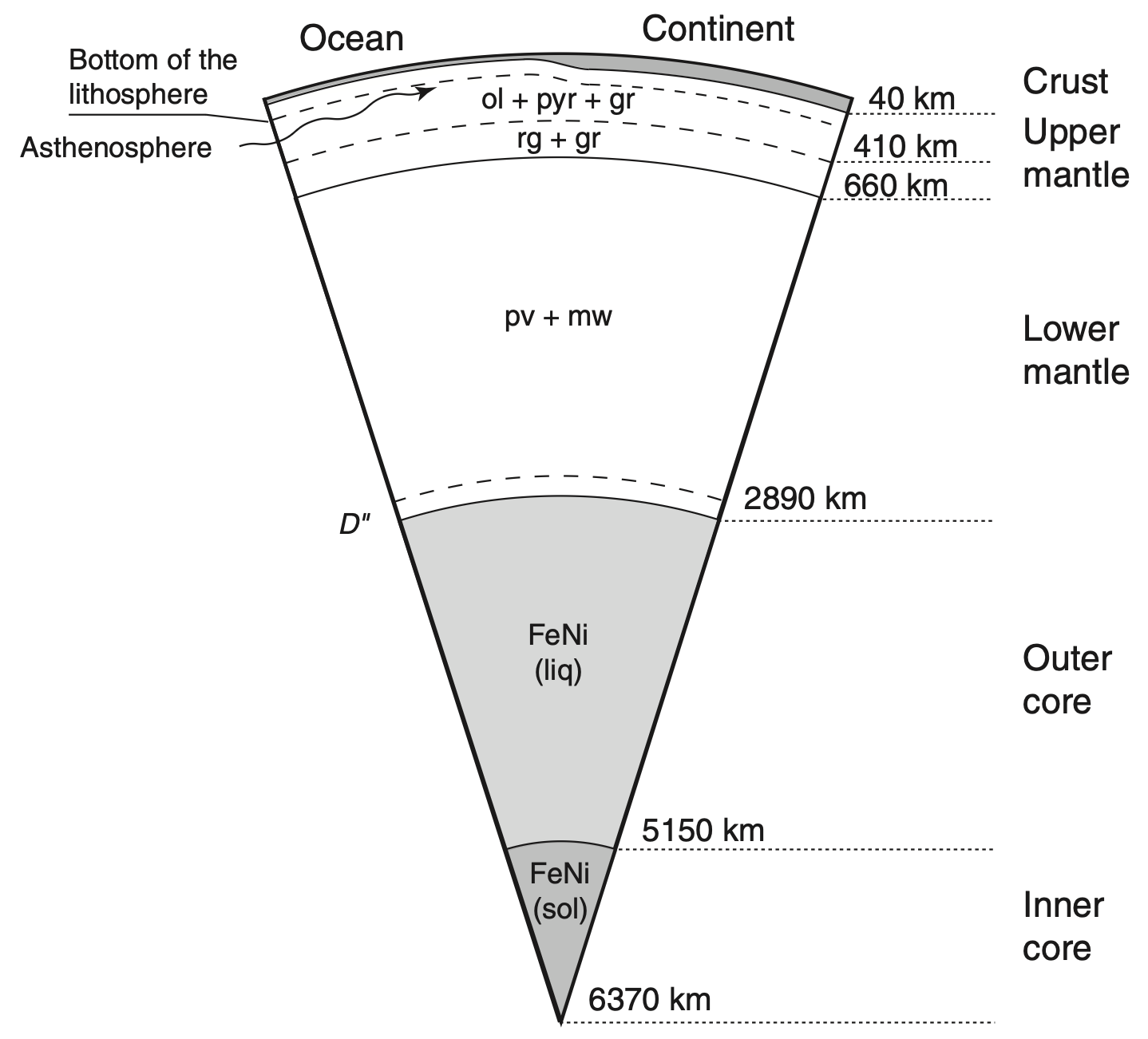
- Crust and Upper Mantel: 40 km thick (5-7 km under the oceans)
- Moho: Discontinuity that marks the end of the crust.
- Upper Mantle: Until a depth of 410 km
- Lower Mantle: Until a depth of 2890 km
- Outer Core: Until a depth of 5250 km
- Inner Core: Until a depth of 6370 km
This data is gathered with the use of seismic waves, p- and s-waves travel with different speed through the layers.
Question and Answers
What are the three primitive layers of earth?::Crust, Mantle and Core
What are the layers of Earth?
?
- Crust: 40 km thick (5-7 km under the oceans)
- Moho: Discontinuity that marks the end of the crust.
- Upper Mantle: Until a depth of 410 km
- Lower Mantle: Until a depth of 2890 km
- Outer Core: Until a depth of 5250 km
- Inner Core: Until a depth of 6370 km