The Sun
Description of Sol
| Property | Value |
|---|---|
| Mass | |
| Radius (photosphere) | |
| Mean density | |
| Irradiance (at Earth) | |
| Luminosity | |
| Surface gravity | |
| Effective temperature | |
| Age | |
| Mean distance from Earth | |
| Rotation period | |
| Rotation speed (equator) | |
| Magnetic field strength (typical values) | General solar Sunspot Chromospheric plage Prominence |
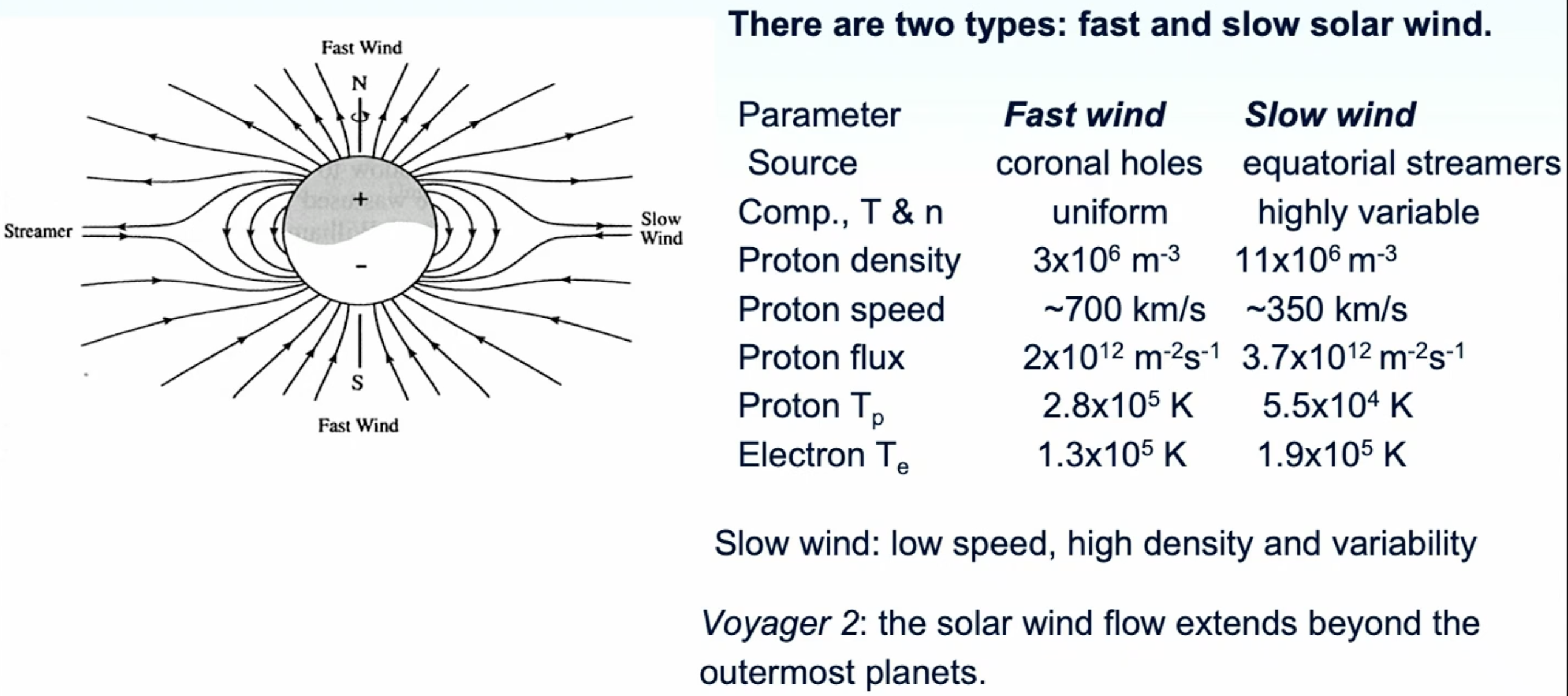
| Solar wind velocity | |
| Solar wind mass loss | |
| Spectral type | G2V |
| Absolute visual magnitude, |
|
| Relative visual magnitude, |
|
| The density is in the same range as water. |
Structure
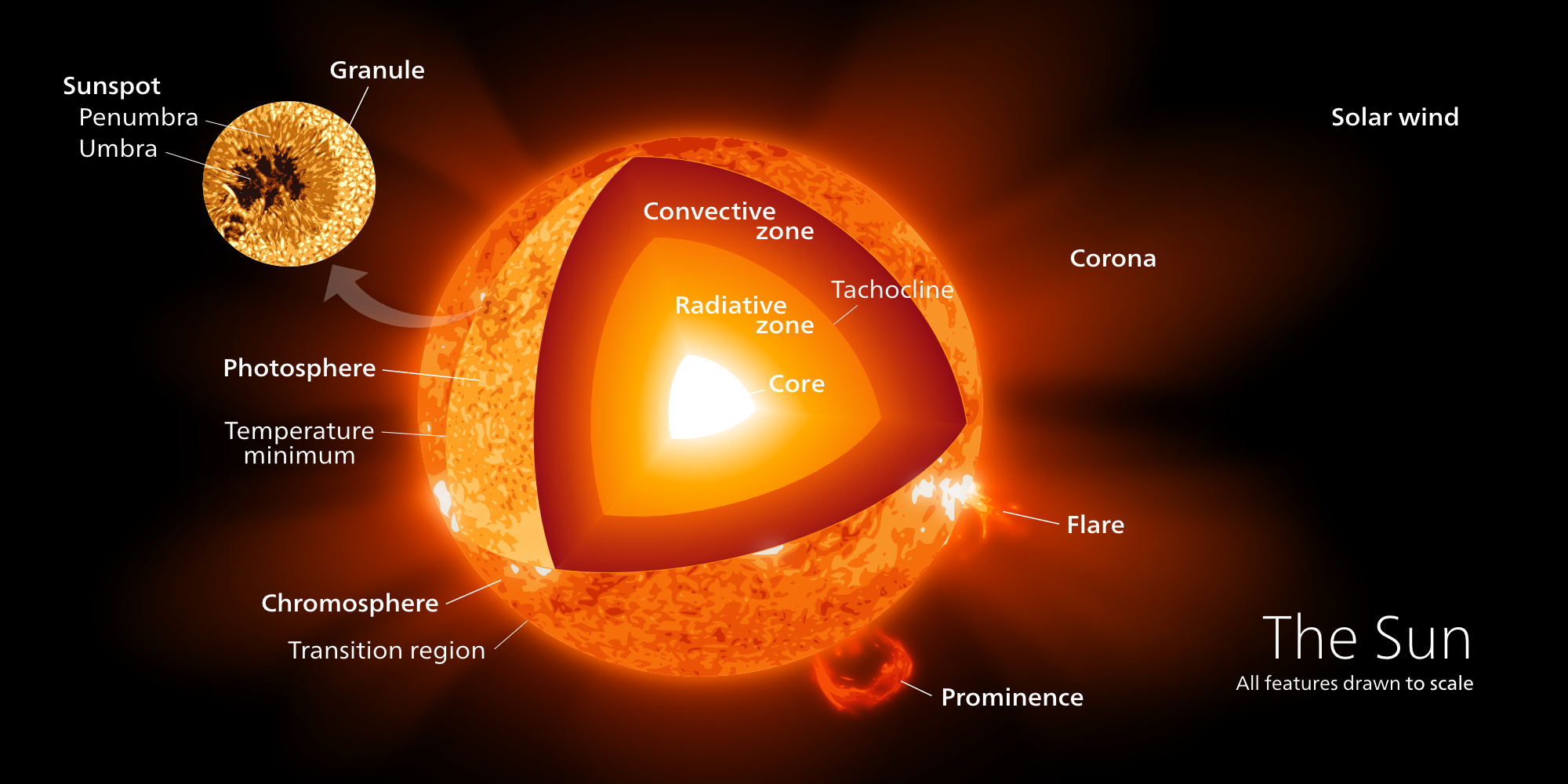
- The solar interior
- Dense core
- Temp.: 15 million °C
- Nuclear fusion occurs
- Radiation Zone
- Energy travels from the core outwards as light. Because the material is very dense, a photon can get bounced around a lot and can take up to 100'000 years to traverse this layer.
- Convection Zone
- Slightly cooler plasma that is less dense. Energy is moved via convective currents.
- Dense core
- The solar atmosphere
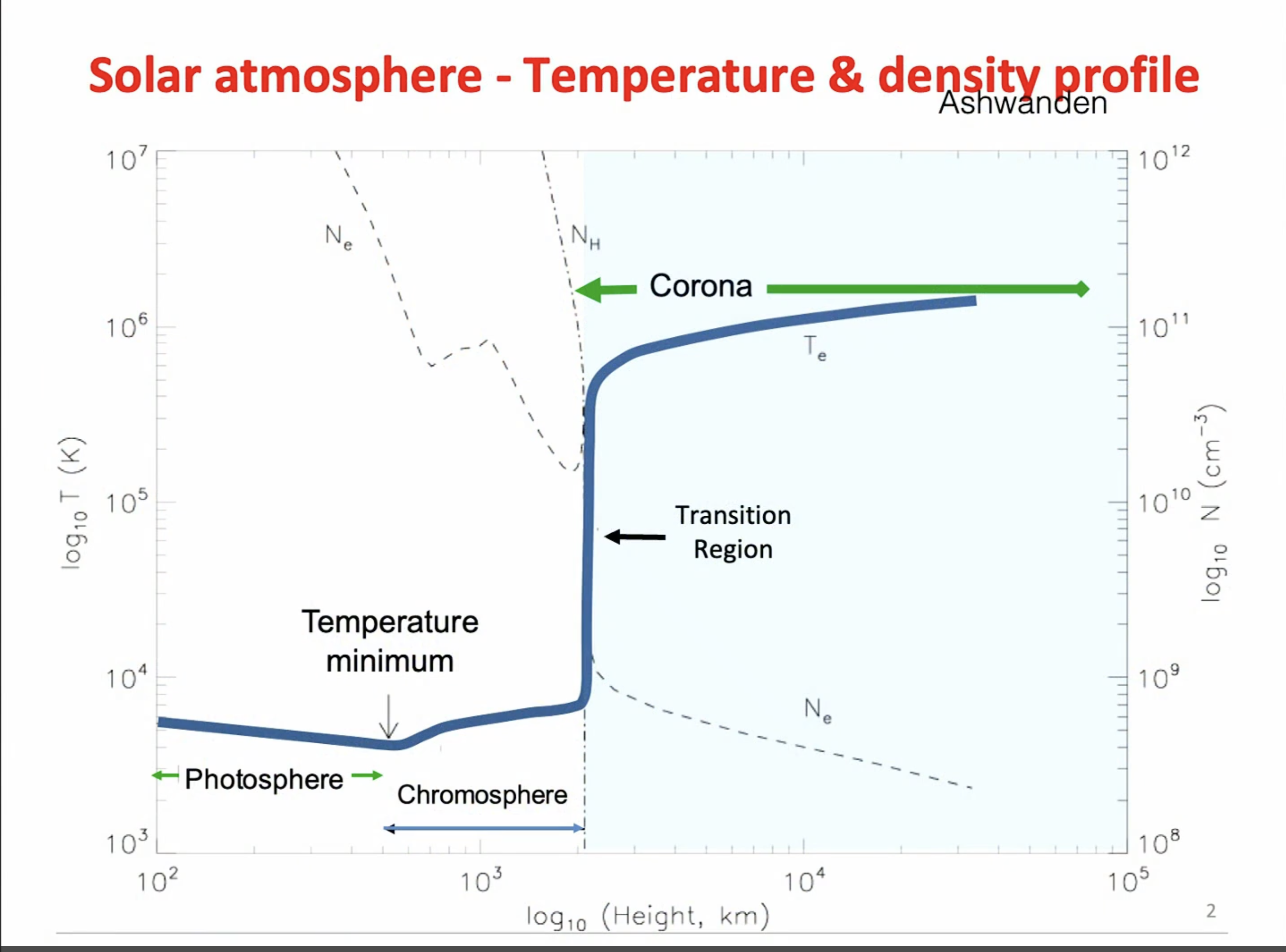
- Photosphere
- This is the "surface" of the Sun that we see from earth. It isn't solid, but rather a layer of gas. This is where sunspots appear.
- Chromosphere
- A thin, reddish layer sitting above the photosphere. It is usually invisible to the naked eye because the photosphere is so bright, but can be seen during a total solar eclipse.
- Corona
- The outermost part of the atmosphere, extending millions of kilometers into space. It is incredibly thin but mysteriously much hotter than the surface of the Sun.
- The Earth sits in the corona
- Photosphere
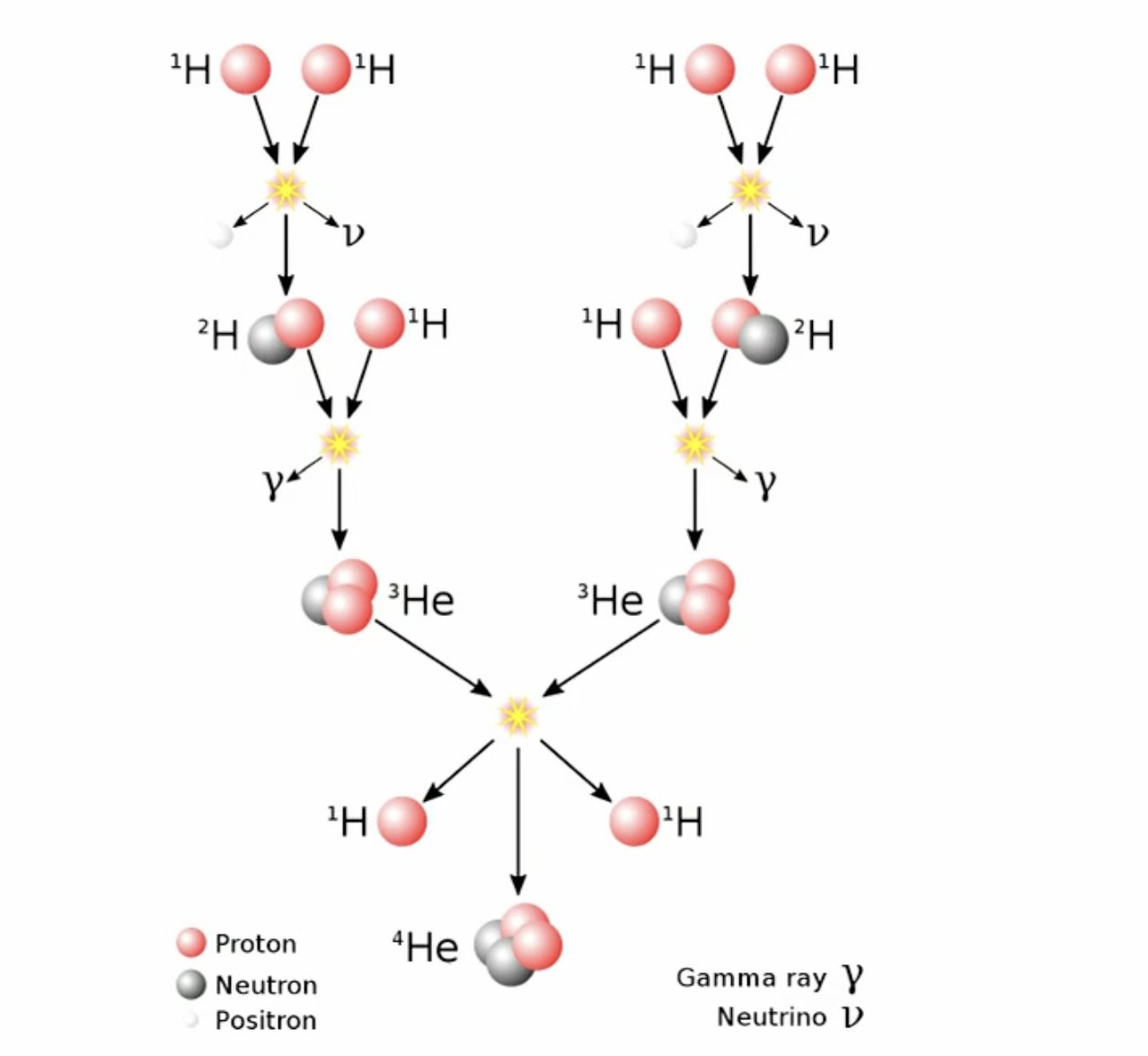
The Energy Source in the core
In the core, there is nuclear fusion through the proton-proton chain.
Photosphere
On the Surface there is a structure, these are convective cells.
Rotation and magnetic field
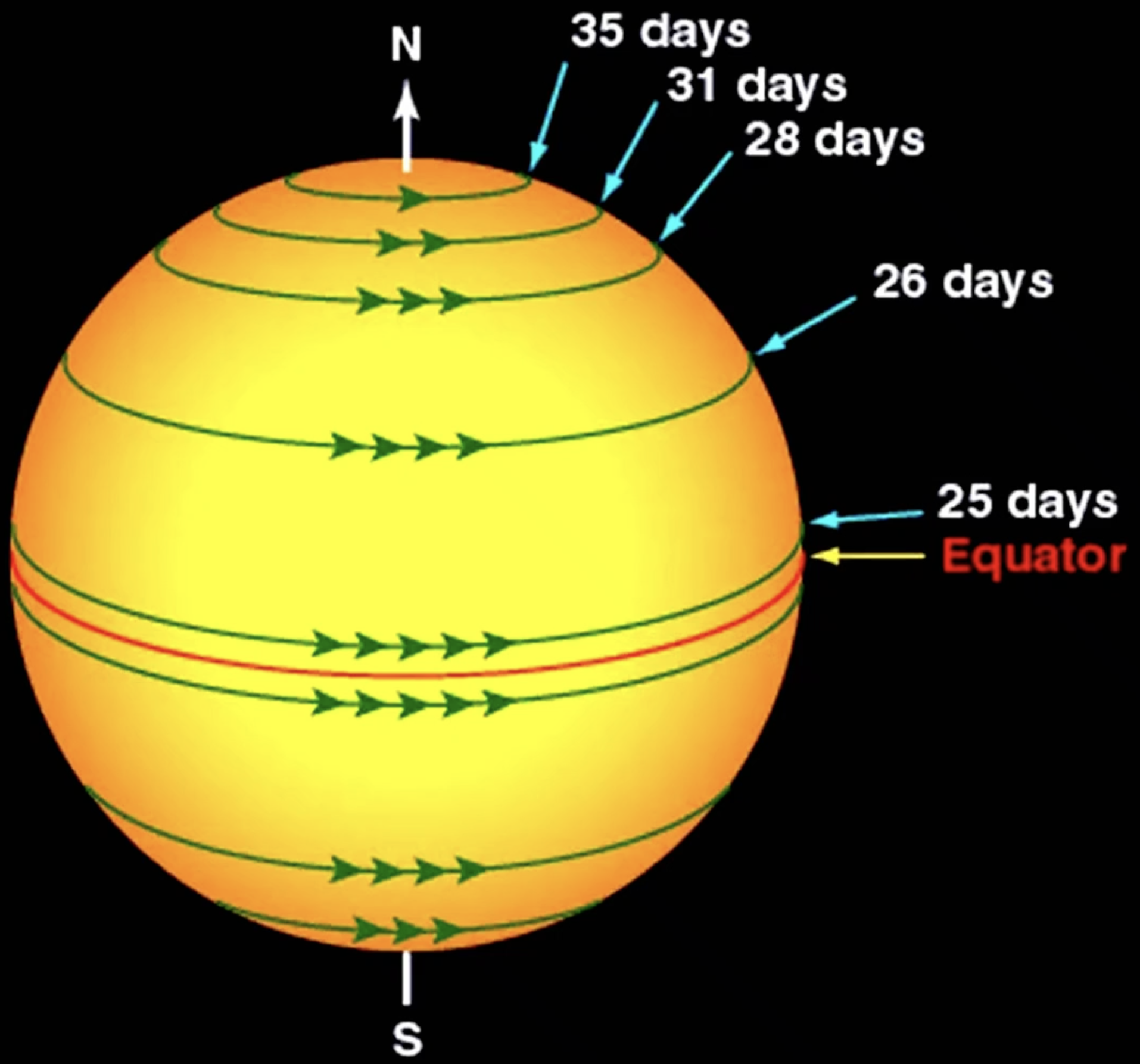
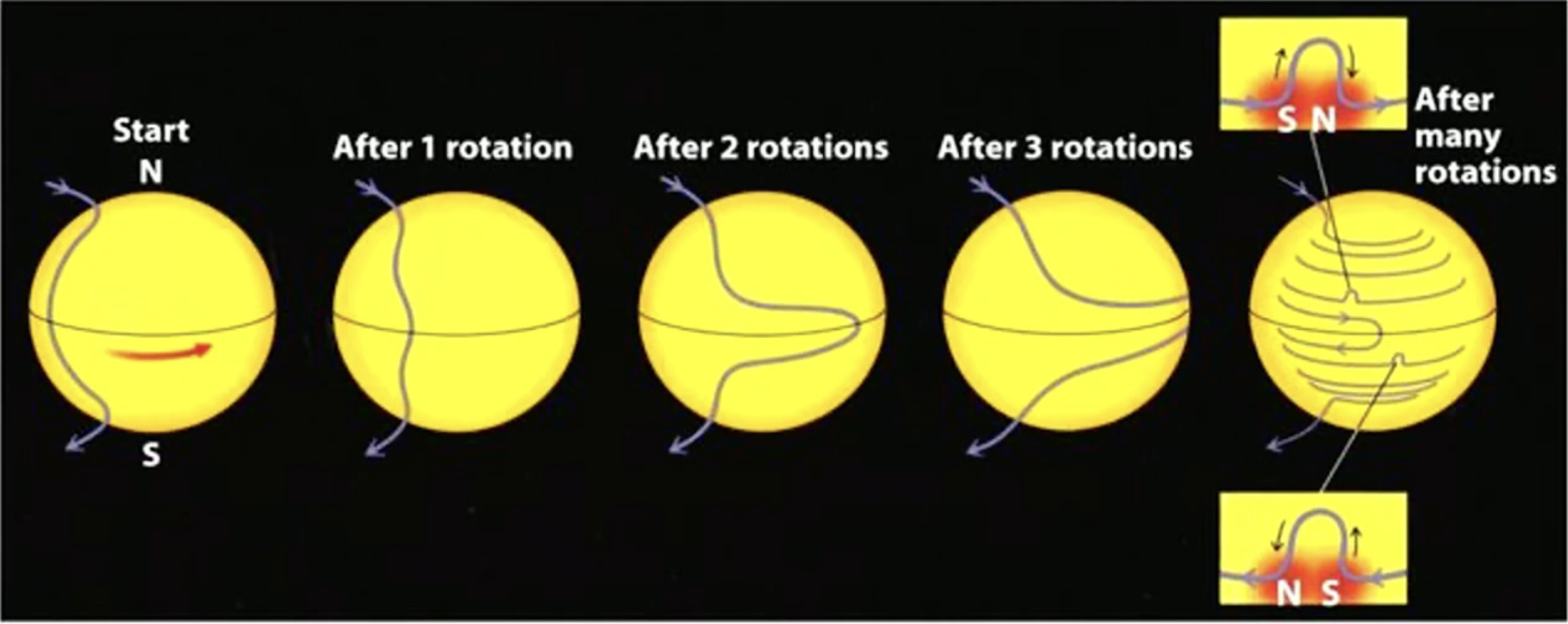
The sun does not rotate the same on the surface. This differential Rotation acts on the magnetic field of the sun.
Sun cycle
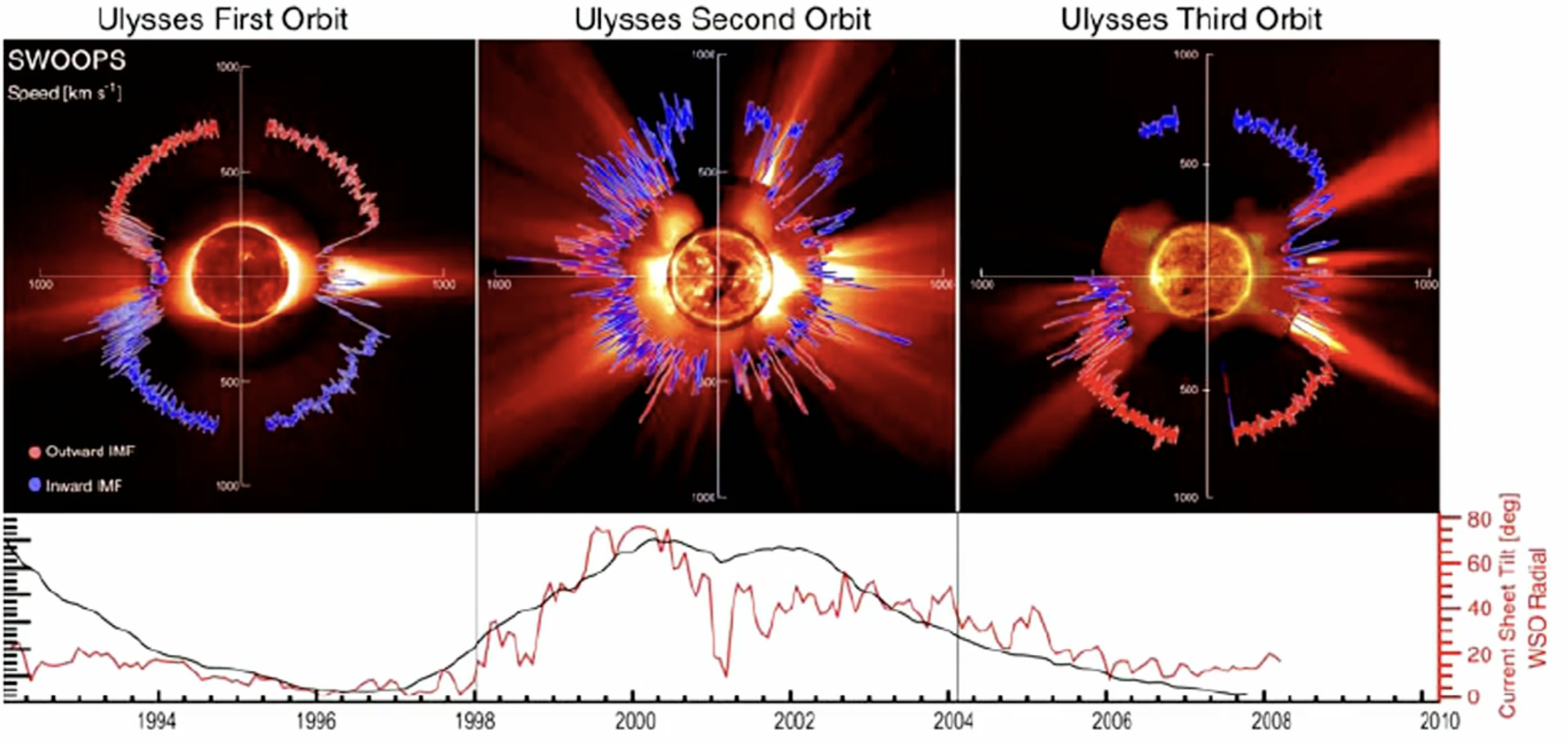
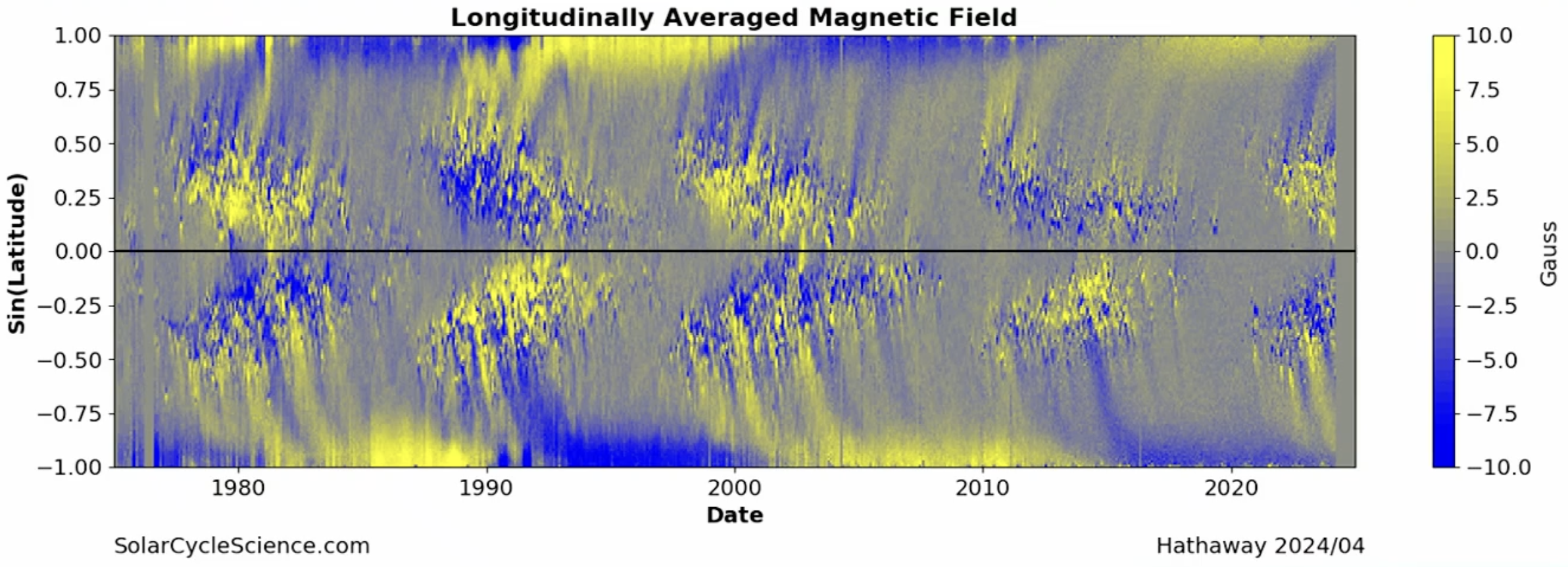
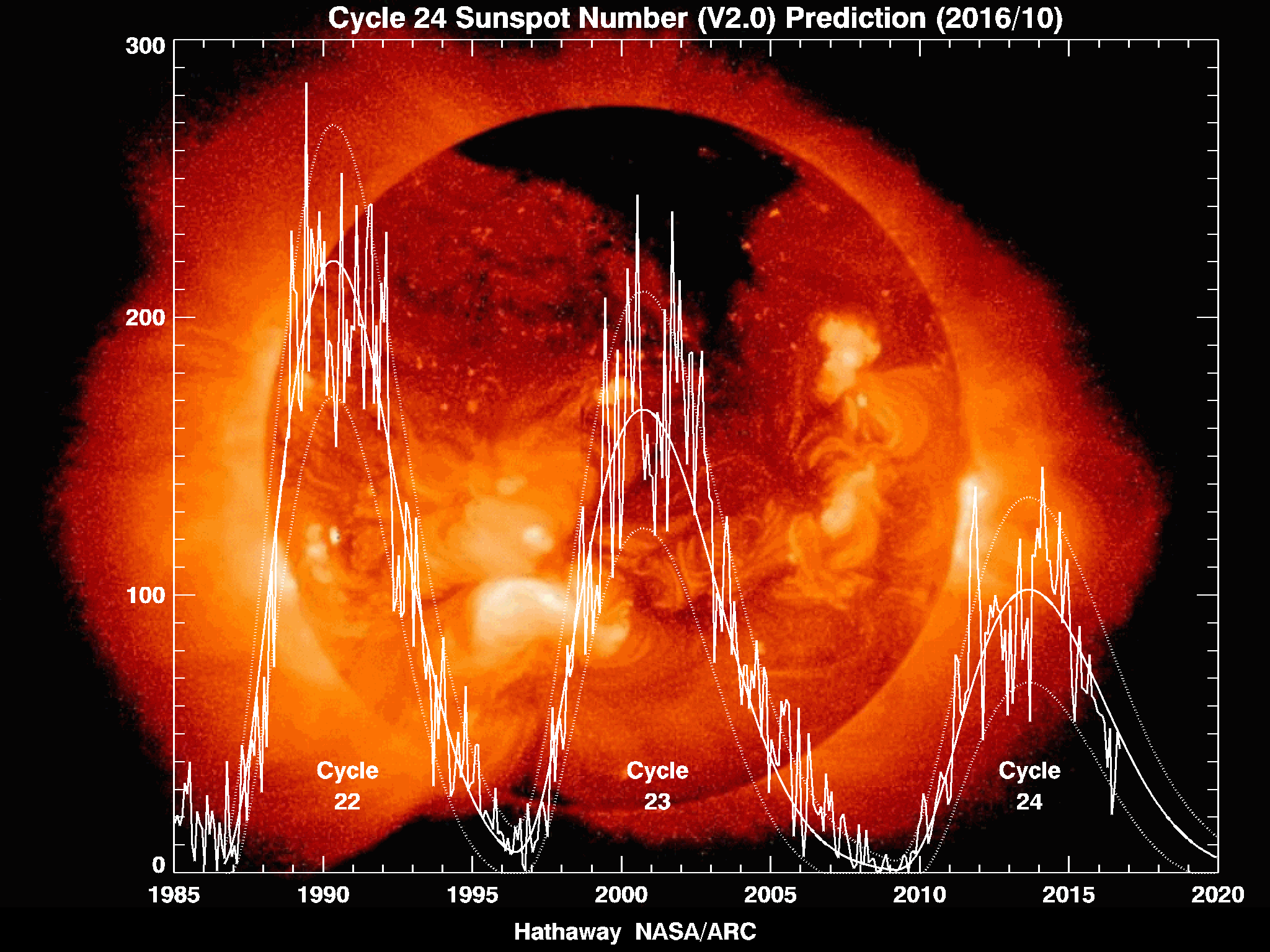
The cycle has a duration of 22 years and a magnetic field inversion every 11 years.
In the cycle Solar activity changes with also the amount of Sunspots. A maximum also coincides with Solar flares and Coronal mass ejections. We are probably at the end of the modern maximum.
The cycle of the sun coincides with magnetic flips.
Sunspots
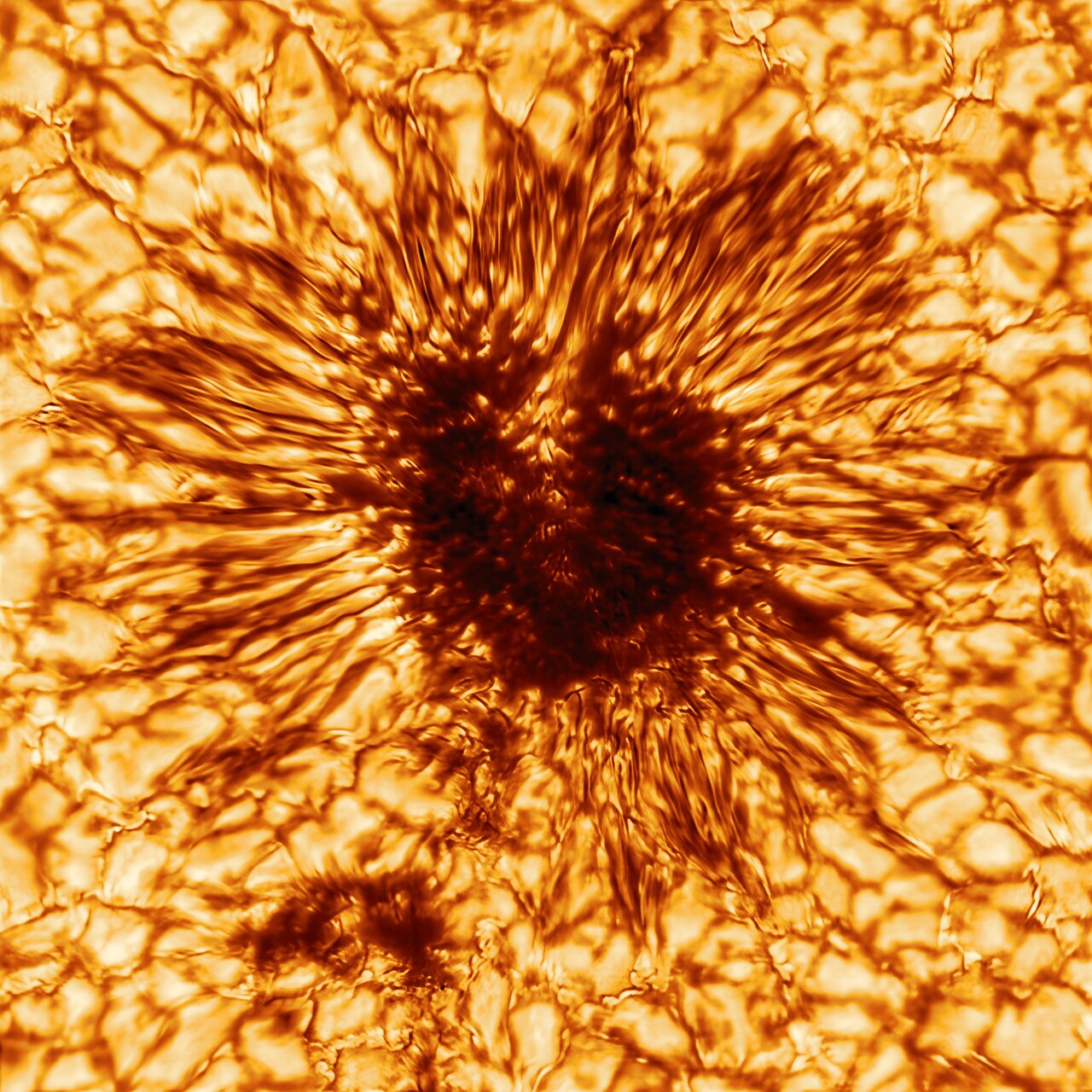
Are the places where the magnetic field lines break through the surface of the sun. The regions of the sunspots are also one of the hottest regions.
Solar Wind
Originate from coronal holes with a open magnetic field (400-800 km/s)
Slow wind originates from active near-equatorial regions assosiated with clodes magneic structures (250-400 km/s)