Space Mission Engineering
- Defining the mission objectives (What?, Why?) -> L1 requirements
- Trading and defining the mission architecture and the concept of operations by which the mission is accomplished -> L2 requirements
Mission Engineering Steps
The following 14 Steps are coming from SMAD
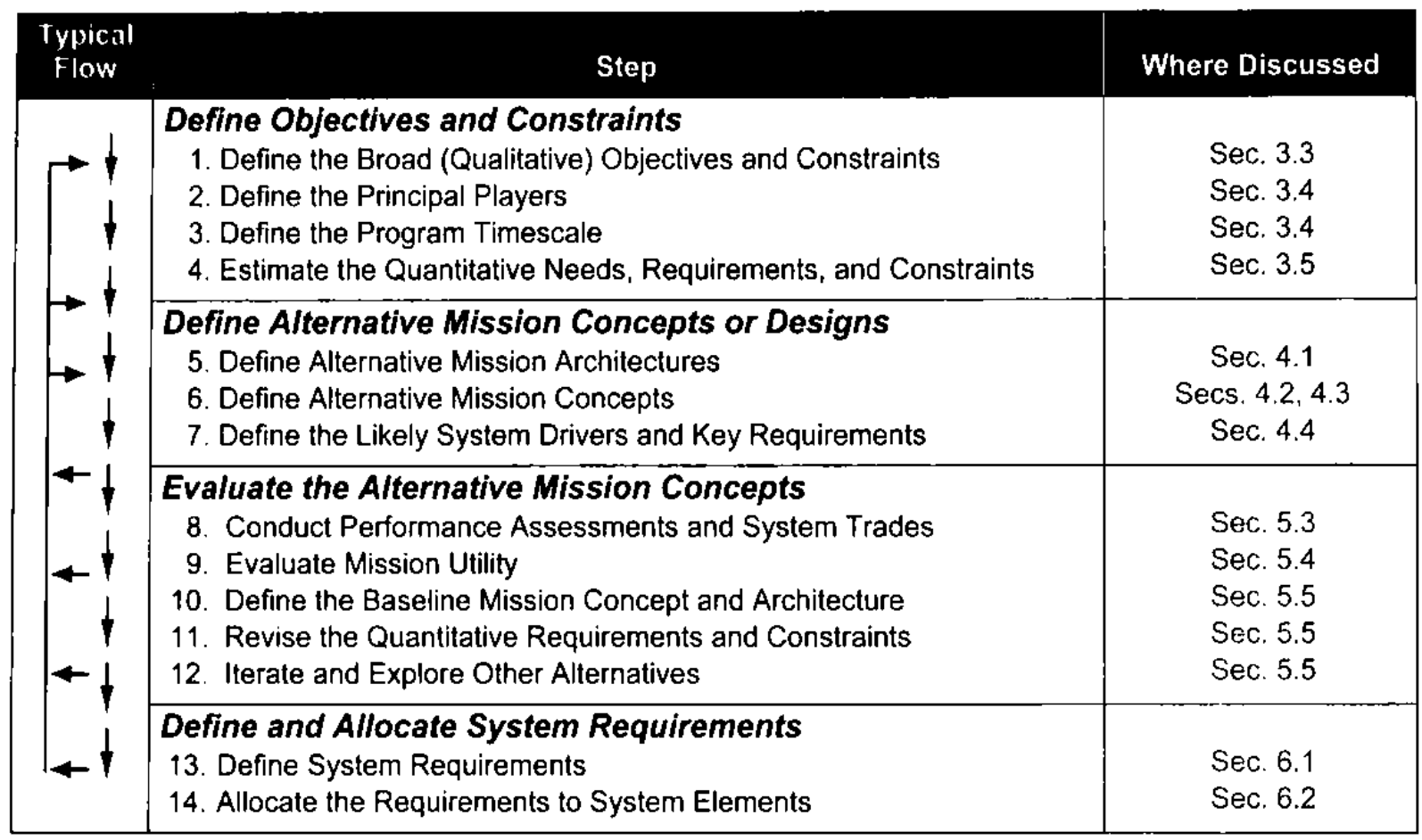
The whole process is iterative over all levels, so nothing is really fixed.
Define Objectives and Constraints
This will give you the L1 requirements in the Requirement Flow Down.
- What is the problem we are solving?
- What is our basic solution, and why is it possibly feasible?
- What are top level constraints on the solution?
- Who are our customers?
- Science Requirement
- Collect 100 kg sample across the specified 12 sampling sites
- Programmatic Requirements
- Launch in early 2030s
- Complete traverse in 4 years (or less)
- Program cost ~ 1.5B$
- Use RTG
Define Alternative Mission Concepts or Designs
Here there are defined different Trade-off studies to determine what is the best concept and design. Import is to always document the reason behind the choices. Important are here also the concepts of system driver and critical requirements:
- System Driver: principal mission parameters or characteristics which influence performance, cost, risk, or schedule and which the user or designer control.
- Critical Requirements: Mission requirements that dominate the design and thus cost.
Evaluate the Alternative Mission Concepts
Do the Trade-off studies defined from before. A tool to use here is the Cost - Design Life Curve, that can be searched for a "knee".
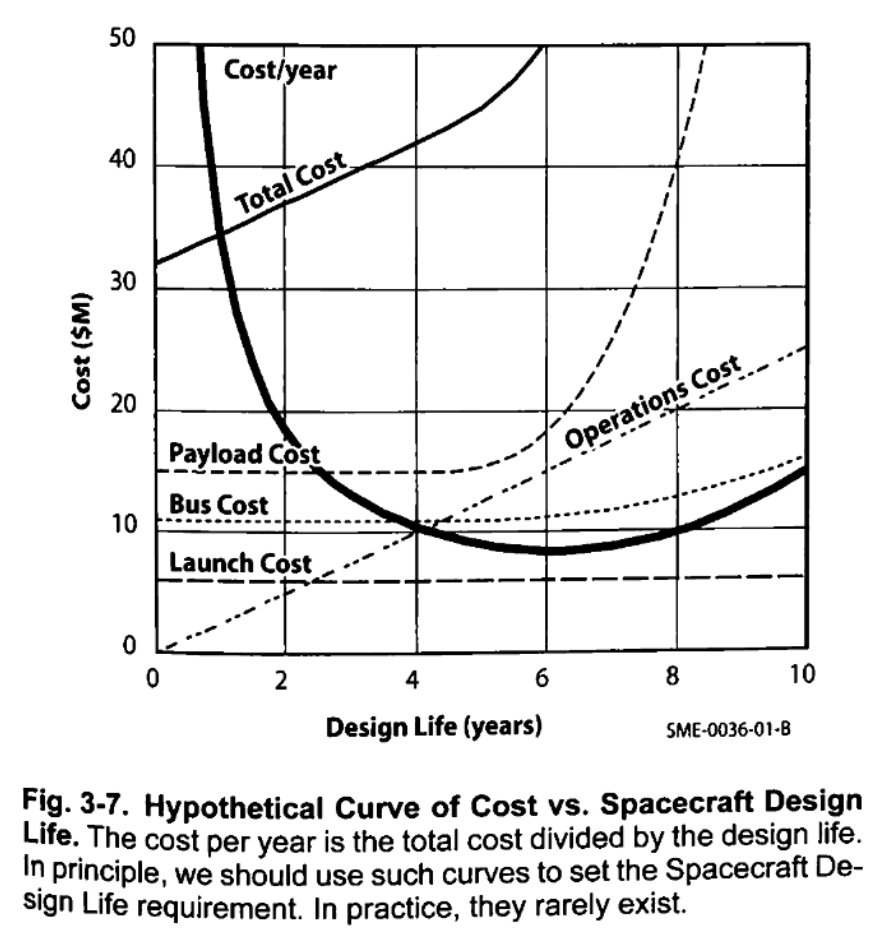
After all studies are evaluated, a baseline needs to be defined. A baseline for the mission concept and architecture. The baseline can evolve as more trades are done, but there always needs to be a baseline people can agree on.
This will result in the L2 requirements in the Requirement Flow Down.
Define and Allocate System Requirements
The requirements are building a tree like structure because there are different levels of requirements that are based on the requirements above it. This is the Requirement Flow Down