Communication
Names and Stuff
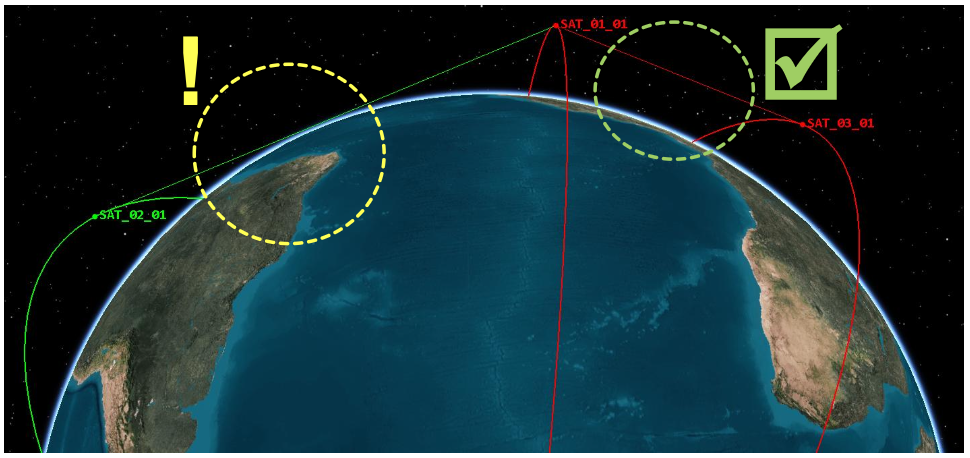
Local Horizon
Where is the horizon dictates what other satellites I can see.
Field of View (FoV) vs Field of Regard (FoR)
The field of view is the view angle that is based on the optical path, without motion of the optical system.
The field of regard is the full range in which the optical system can be moved to.
Spot Size
Is the coverage area of a system. With a point to point system, the spotsize should be minimized to maximize power density. To address a region of interest, the spotsize has to be big.
Topologies
Often it is not feasible to send data from a LEO orbit direct to the ground, because the base stations as not in view for a long time. Here, more complex topologies can be used.
Data Relay
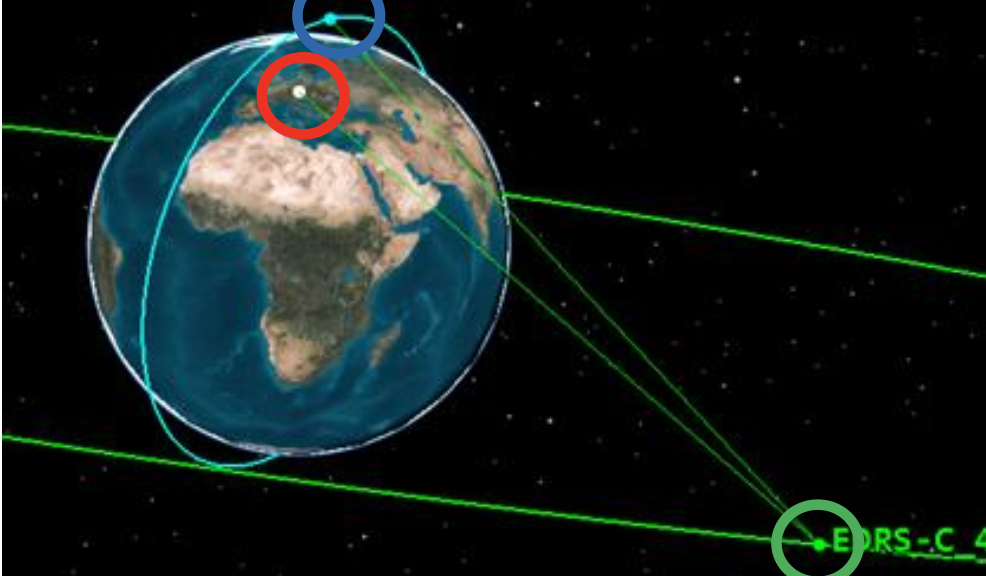
The data is sent from a LEO orbit to a GEO orbit, and then relayed from the GEO orbit to the ground. This leads to a good availability.
Feederlinks / VHTS
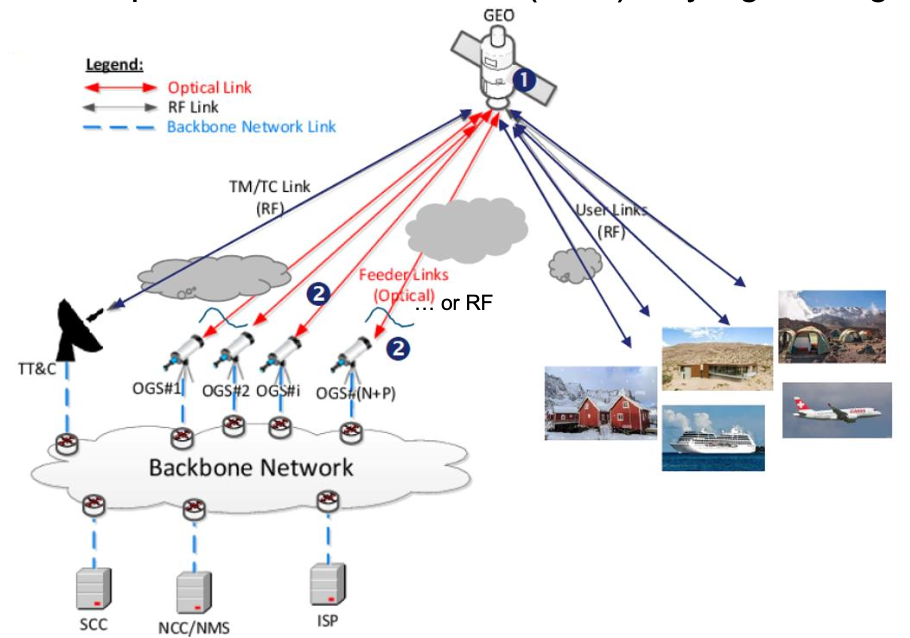
Very High Throughput Satellites are placed in GEO and then relay a lot of data from one base station to the next.
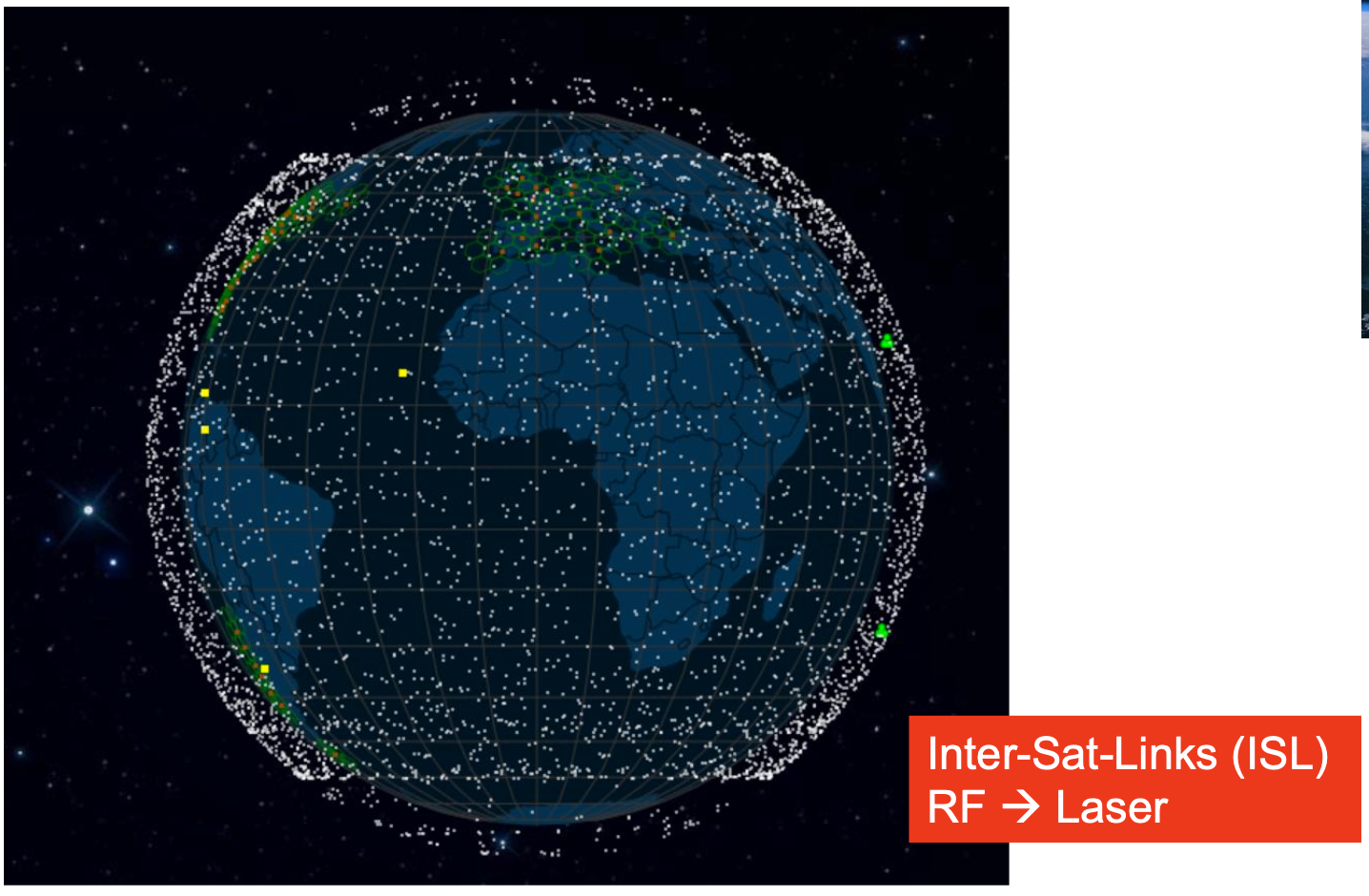
Constellations
A lot of satellites working together with intersat crosslinks as a constellation backbone.
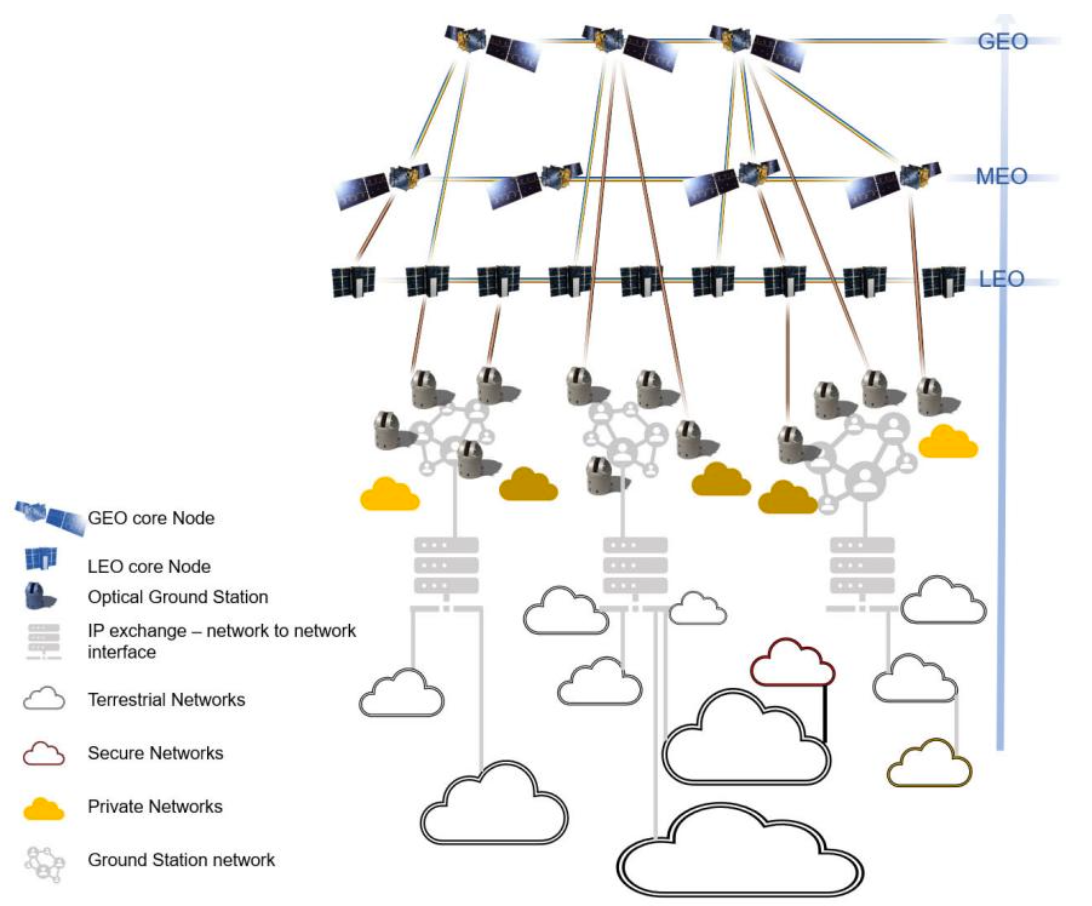
Network in the Sky
A multilayer network with nodes in different orbits.
Direct to Earth
Doesn't need a lot of resources, but needs coding and framing to mitigate outages.
Deep Space
Send data over long distances, ex. Cassini. Large latency, little to no feedback, large efforts.
Teleports
Large commercially operated antenna farms with good visibility, many supported bands and often global locations.
Optical Ground Stations
Ground stations that are able to comunicate over laser with the satellite, good tracking is necessary.
Link Architecture
The core functional elements are:
- Pointing Acquisition Tracking (PAT)
- ensures line-of-sight
- finding one-another
- tracking
- Communication function (COM)
- coding
- framing / syncing
- packeting
- error correction
- buffering
- Modulate signal to carrier
- coding
- Terminal Control Function (TC)
- coordinate high level tasks for the link
- infrastructure
A problem is the atmosphere, mainly with optical wavelengths. It can cause:
- Scattering
- Beam Wander
Communication Link
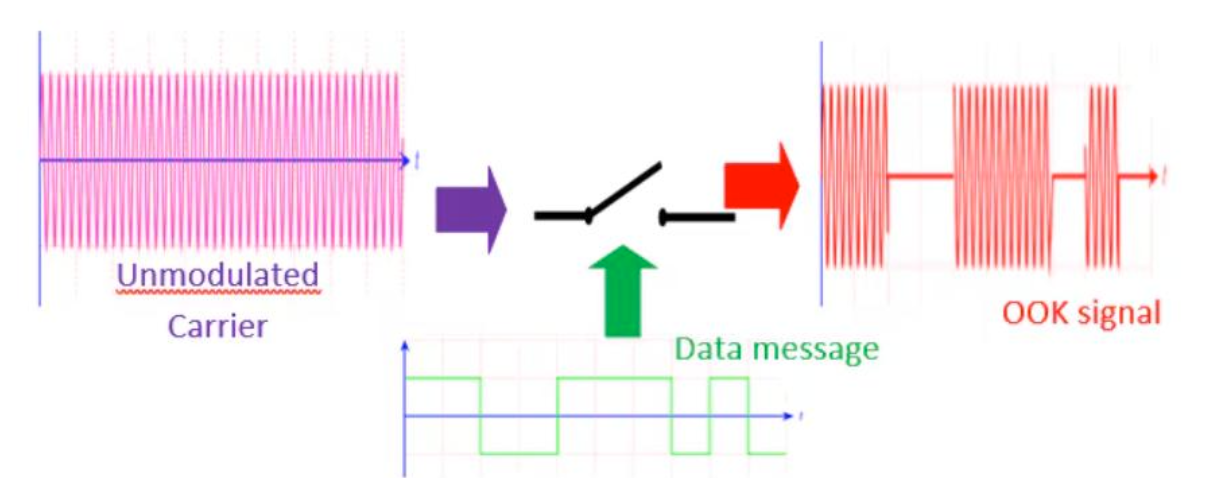
We always have a carrier that is getting modulated with the data message.
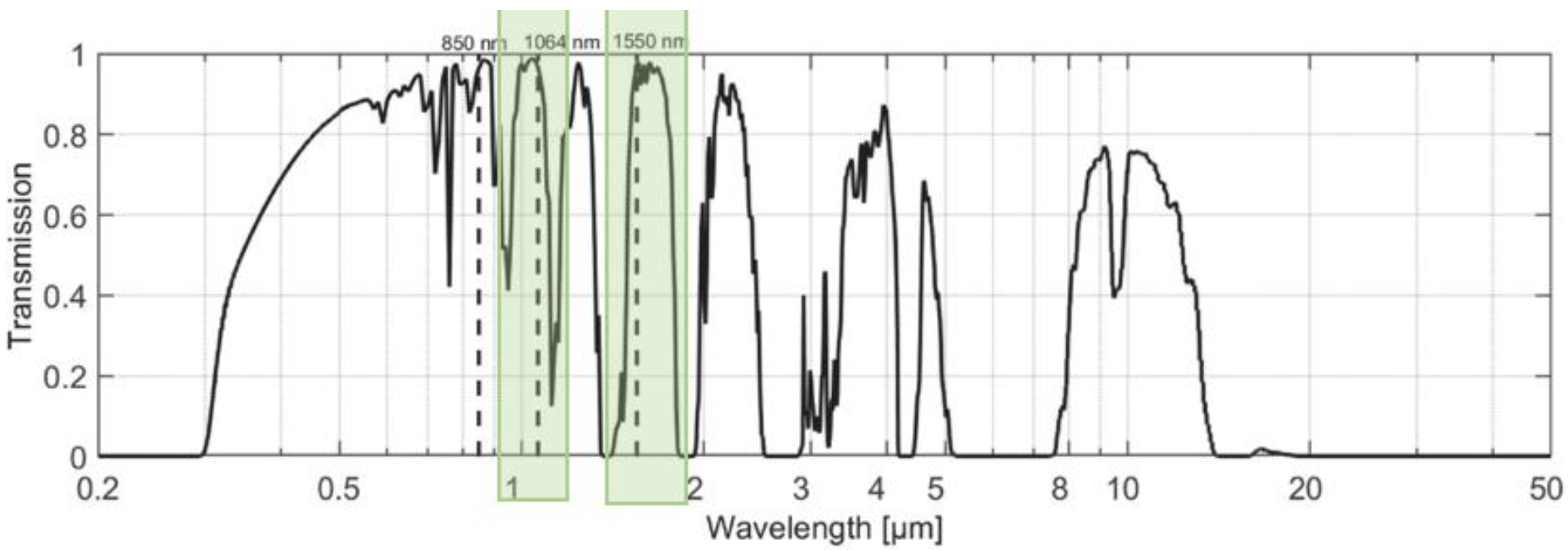
Spectrum
RF frequencies are mostly located in the Ka band (27 - 40 GHz, 11 - 7.5 mm). Ka stands for above the K band, which includes the water vapor resonance peak (22.24 GHz). The Ka band can then be divided in more channels.
For optical applications the wavelength used is now more in the 1550 nm region, earlier there were also 1064 nm applications but recently almost all is based on 1550 nm.
Link Budget - The battle for SNR
Units
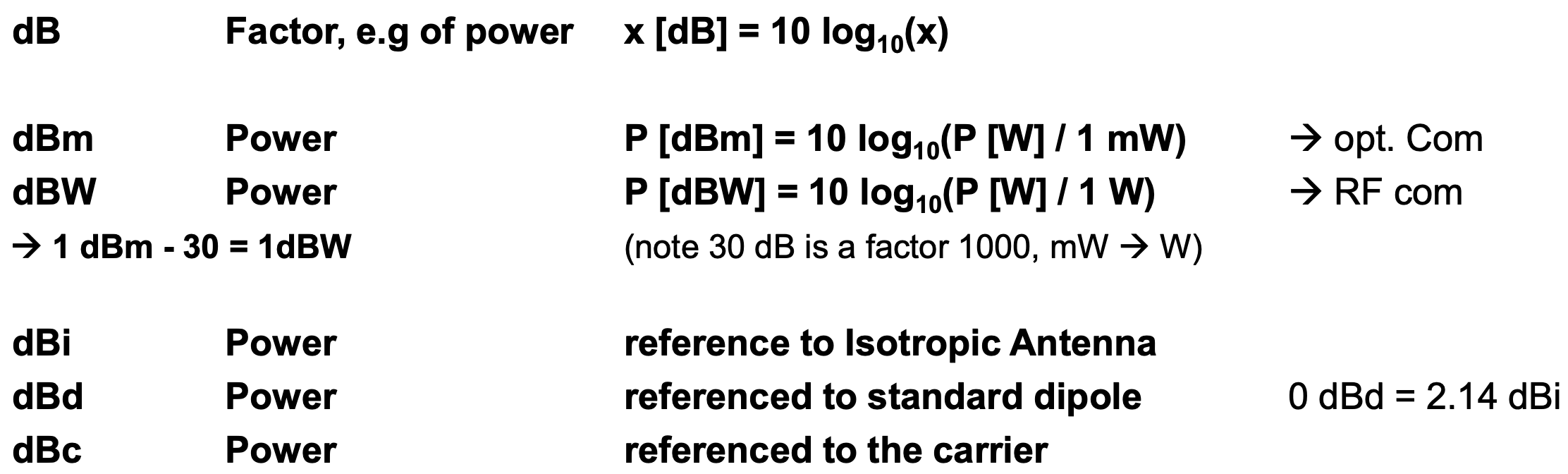
The working in log-scales allows use to turn multiplication into additions.

Noise
Noise can come from a multitude of different locations. Especially electro magnetic (EM) noise can come from the Background or from ambient thermal emissions. Also amplifier and receiver can also add noise into the system.
System Noise Temperature
In electronics the Noise Power is often characterized in a notion of "Noise Temperature", this means the noise is equivalent to the noise that would be produced at a certain temperature. This is defined as the Johnson-Nyquist-Noise (J-N noise).
Noise Power Boltzmann constant (1.380649 10−23 J⋅K−1) Noise Temperature relevant Bandwidth
Modulation and Coding
Modulation
We have a carrier frequency, and this carrier is modulated with our signal. The signal can be analog or digital, and the modulation can be on intensity (changing the amplitude of the carrier, AM Radio) or coherent (acting on the phase or frequency of the carrier, FM Radio)
On-Off Keying (OOK)
The carrier is either there or not, direct and simple. Can carry on bit per symbol.
Pulse Position Modulation (PPM)
The carrier is switched on, on a certain position, which would correspond to a positive bit in this position. This is more robust against noise.
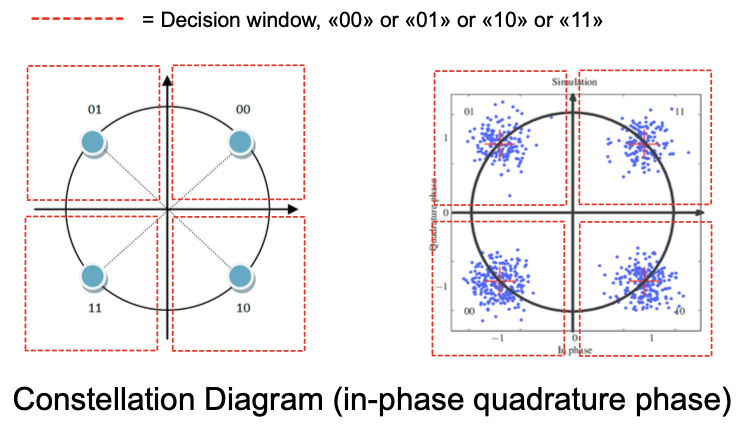
Quadrature Phase Shift Keying (GPSK)
The carrier is shifted in phase, and corresponding to the amount shifted it stands for different bits. This can be with 4 states (2 bits) or even 8 states (3 bits).
Coding
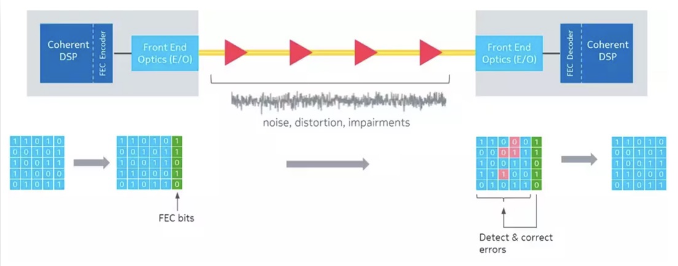
Data is not sent as a raw bit stream, coding allows also for Error correction.
Forward Error Correction (FEC)
G.709 defines a stronger FEC that can result up to 6.2 dB improvement in SNR.
Code rate:
CCSDS File Delivery Protocol (CFDP)
Data is requested and there is a back and forth between satellite and station do make sure that all data is successfully transmitted before it gets cleaned in the satellite.
Interleaver
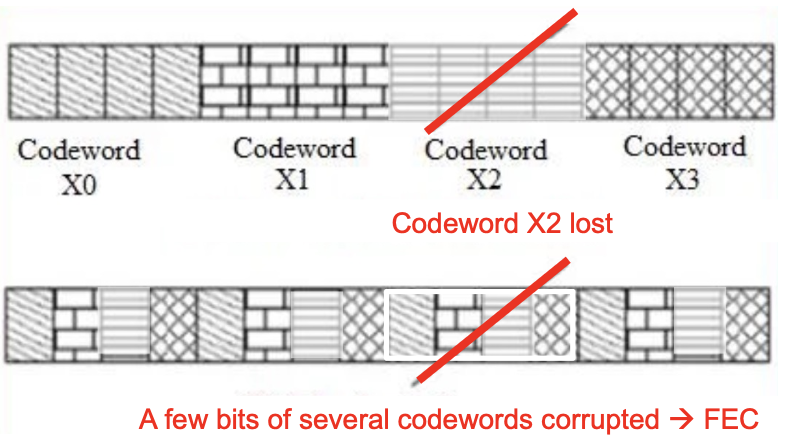
Do not send all data for one block at ones, spread it out, so if a part won't get sent through then not all data from the block is lost.