Requirements
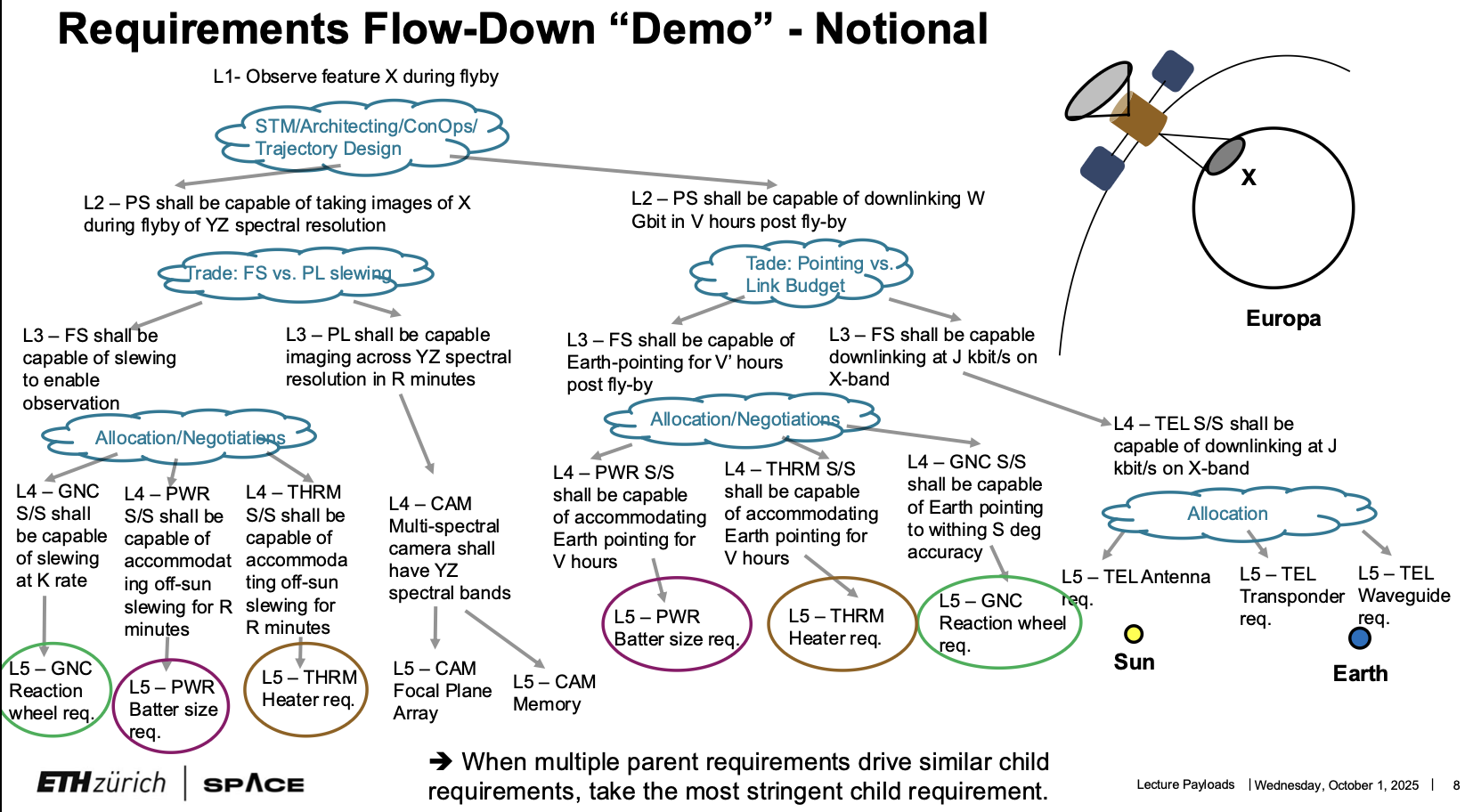
Requirements can be visualized by a flow down structure that results in a requirement tree.
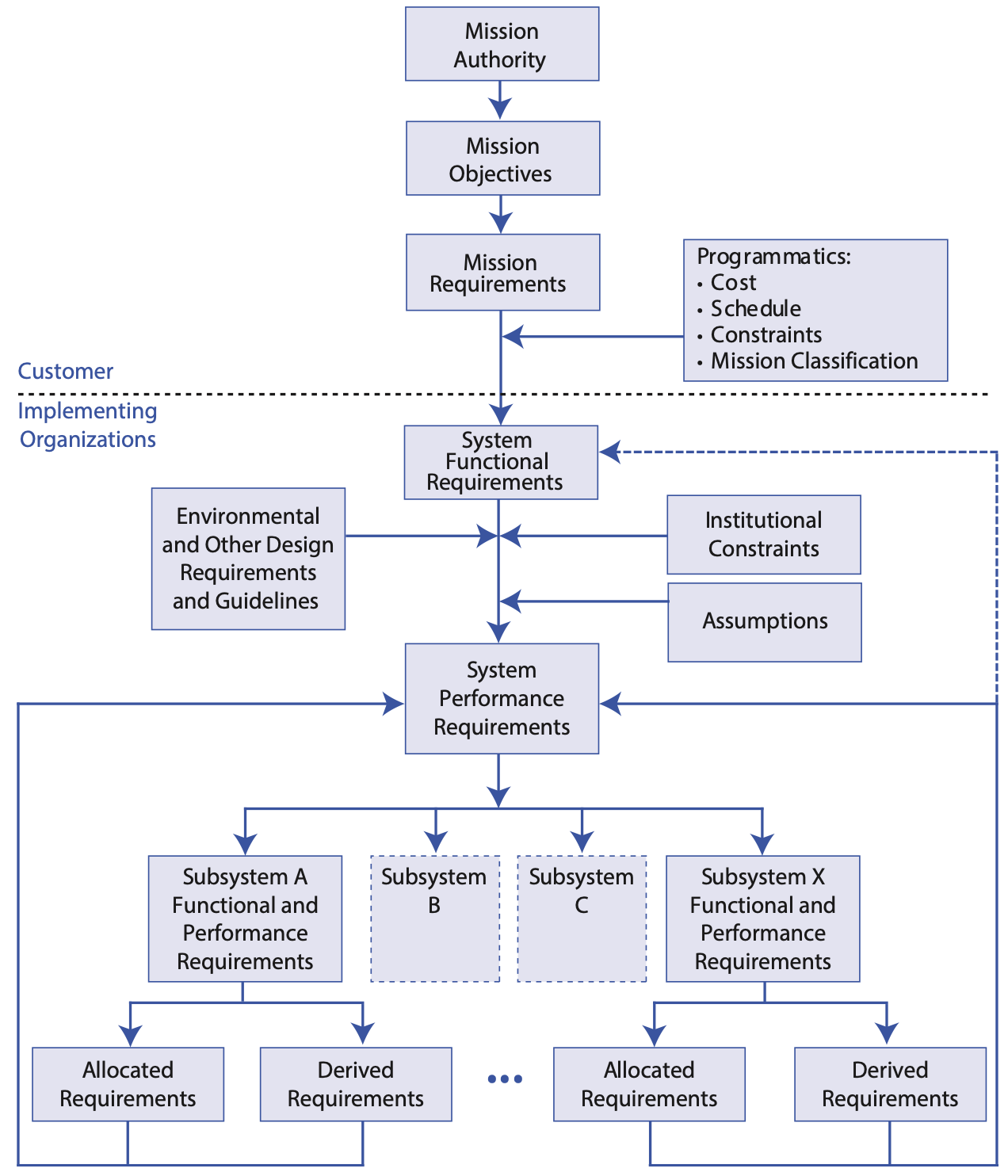
Levels of Requirements
- L1 - Science and Program
- Are defined in Space Mission Engineering
- L2 - Mission
- Are defined in Space Mission Engineering
- L3 - System
- L4 - Subsystem
- L5 - Assembly
Example: Flow-Down
How to formulate Requirements
Shall vs Should
- Shall, has to be this way
- Should, not as hard as shall
When writing requirements use:
- L2 mission requirements: "The Project shall ..."
- L3 flight system requirements: "The Spacecraft shall ..."
- L3 payload system requirements: "The Payload shall ..."
Stay with the requirement in the level of the requirement:
- Good: "The Project System shall downlink XYZ data volume over the course of the mission."
- Bad: "The Project System shall downlink YYZ data volume over the course of the mission using error correcting codes."
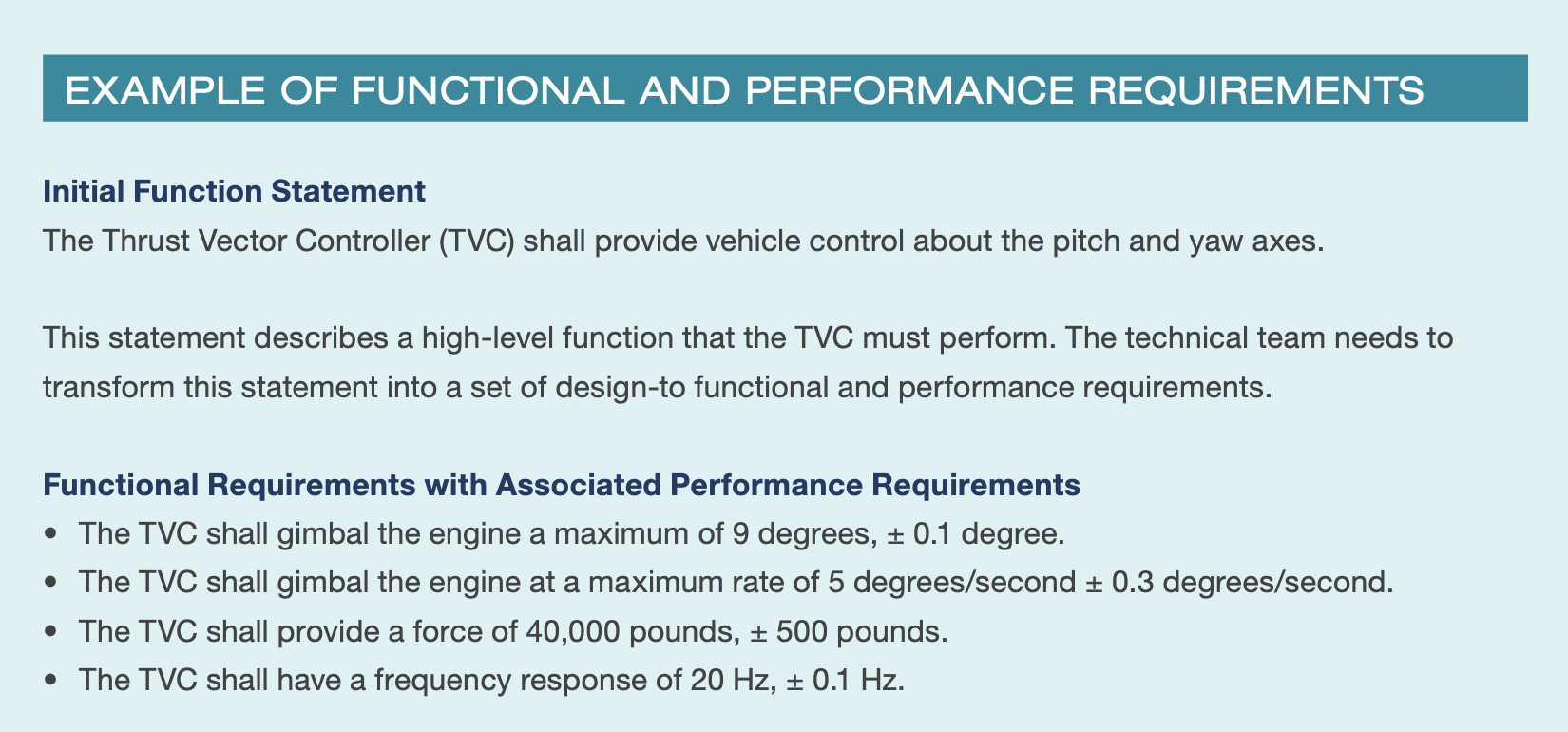
Types of Requirements
- Functional: What is to be done.
- Performance: How well it has to be done (a quantifiable value)
- Verification: How performance will be proven.
Specify What, not How. Requirements should state the mission-relevant rather than the implementation. Example, specify image resolution and not altitude and field of view. The implementation team will figure out how to best meet the requirement. Do not over-constrain.
Example: Flow-Down
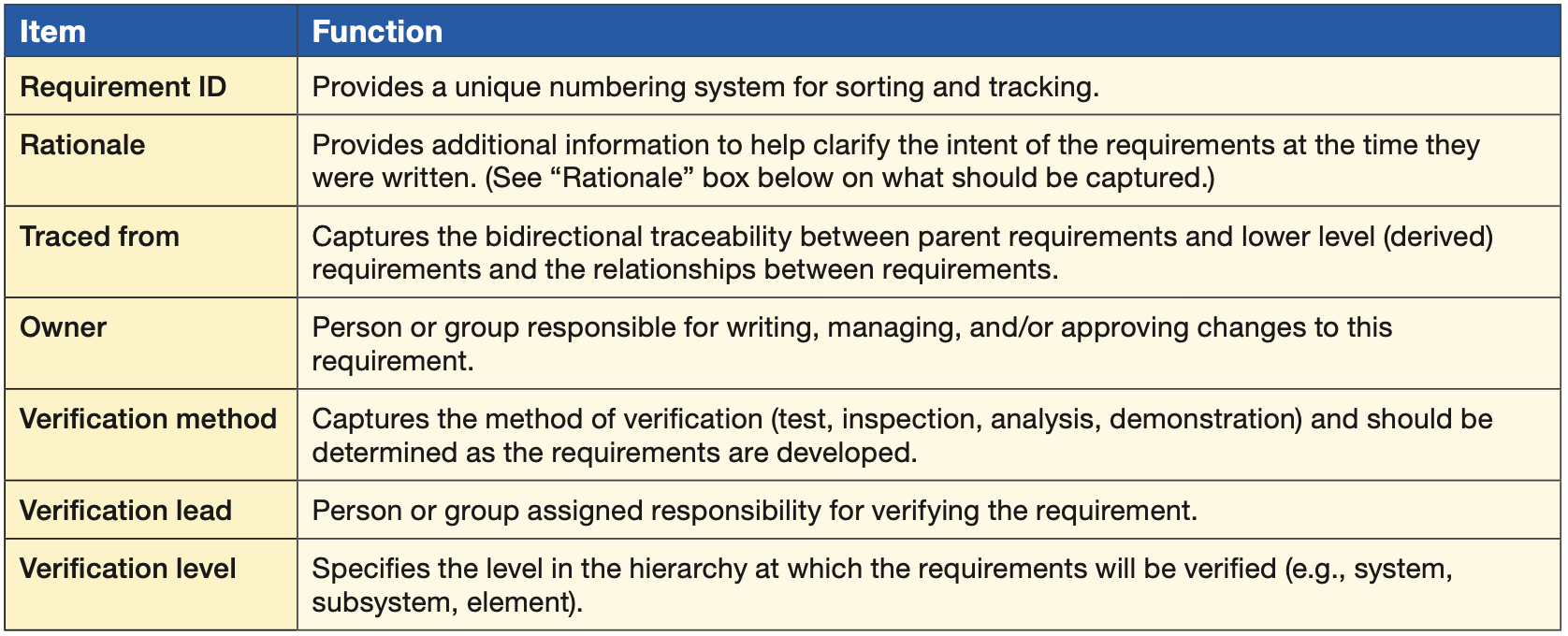
Metadata of Requirements