The Moon and Mercury
Crater Formation
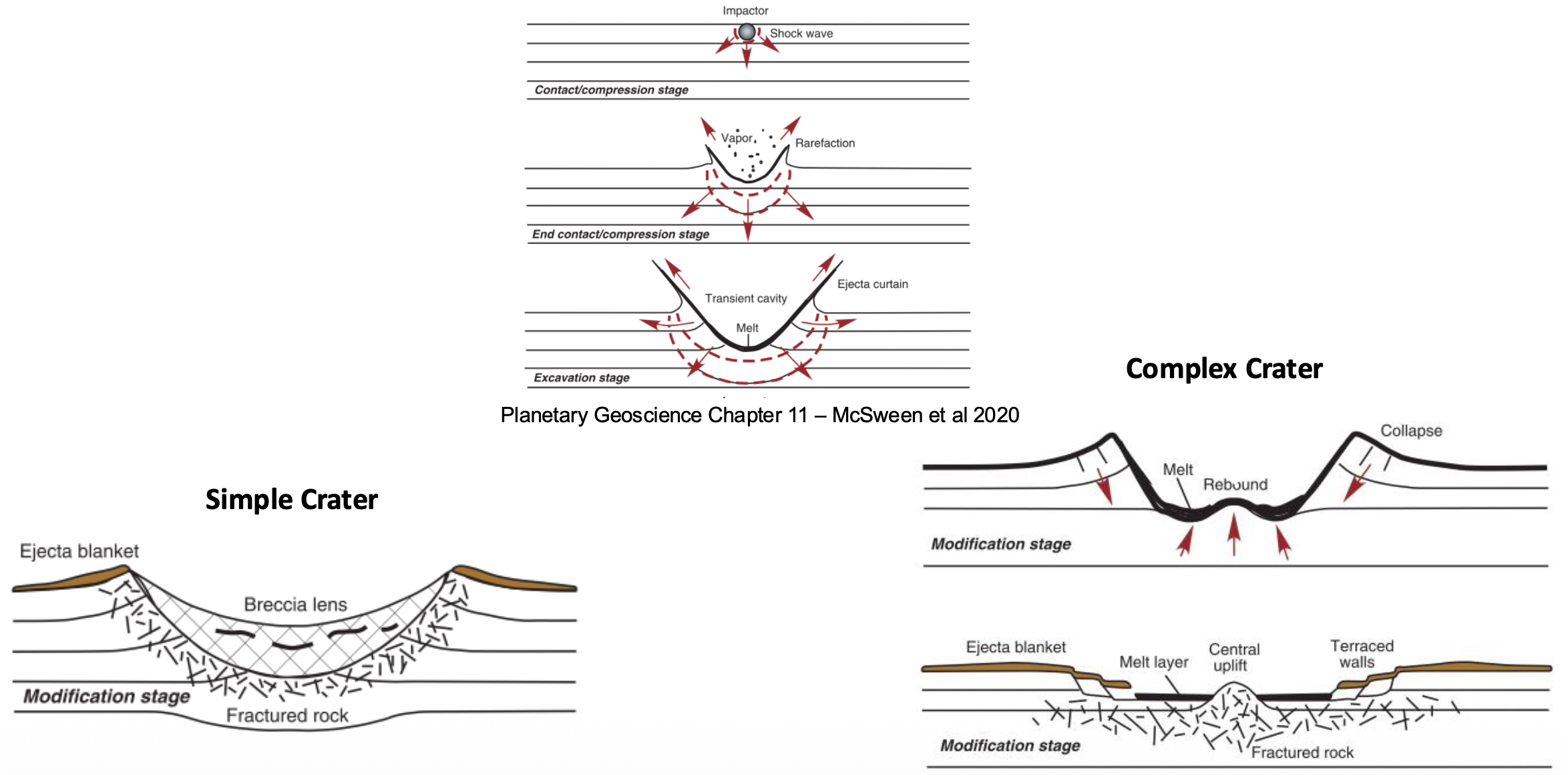
Crater have different features:
- Floor: cater bottom, bowl-shaped or flat
- Central Peak: raised area in the crater floor
- Walls: usually steep, may have terraces
- Ejecta: material excavated from the crater
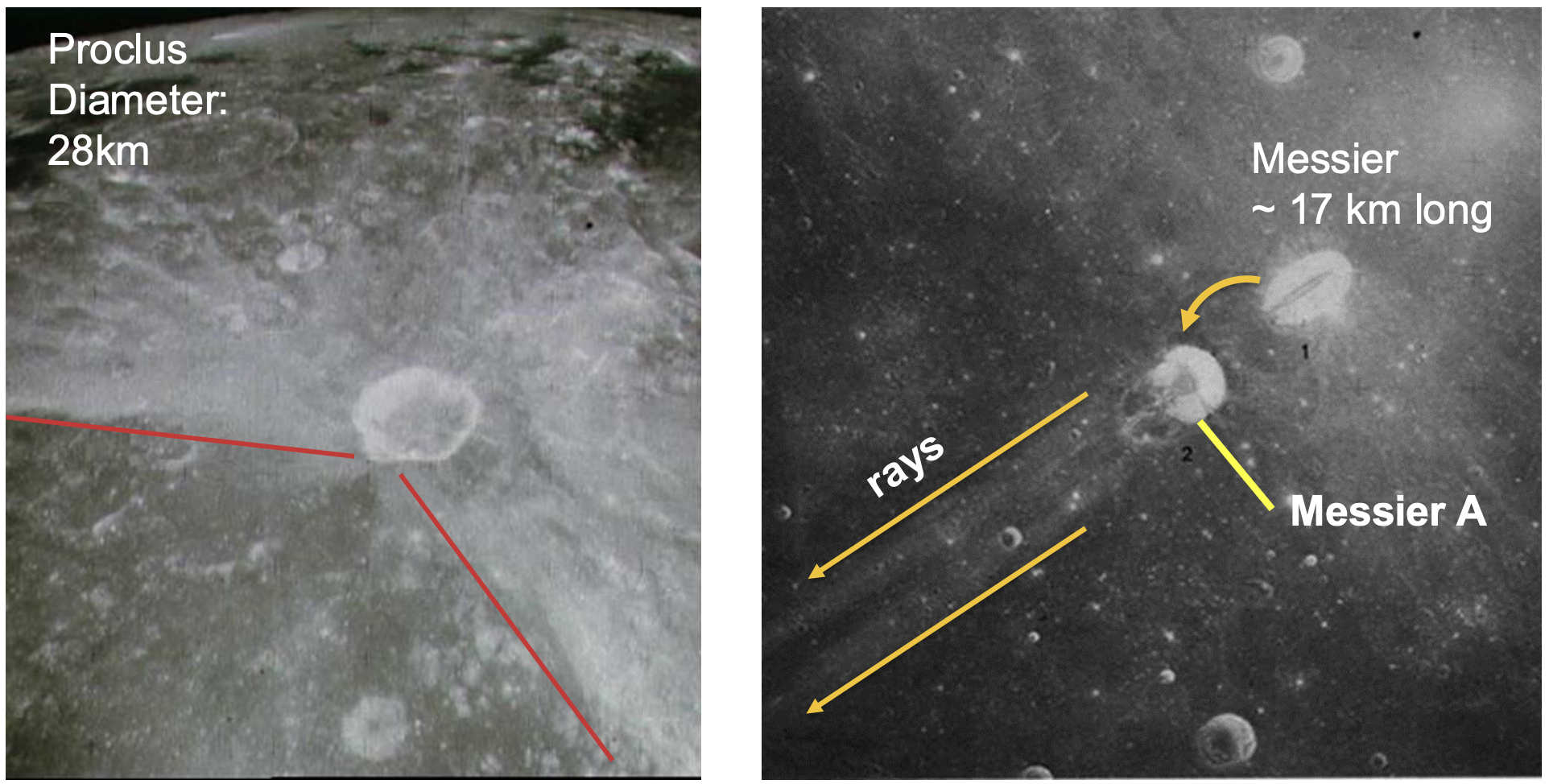
- Rays: bright streaks of ejecta extending away from the crater
Different features are present in the two types of craters, Simple Craters and Complex Craters. Which one is created is mostly dependent on size and therefore on the magnitude of the impact. There are also Transitional Craters that lie in between.
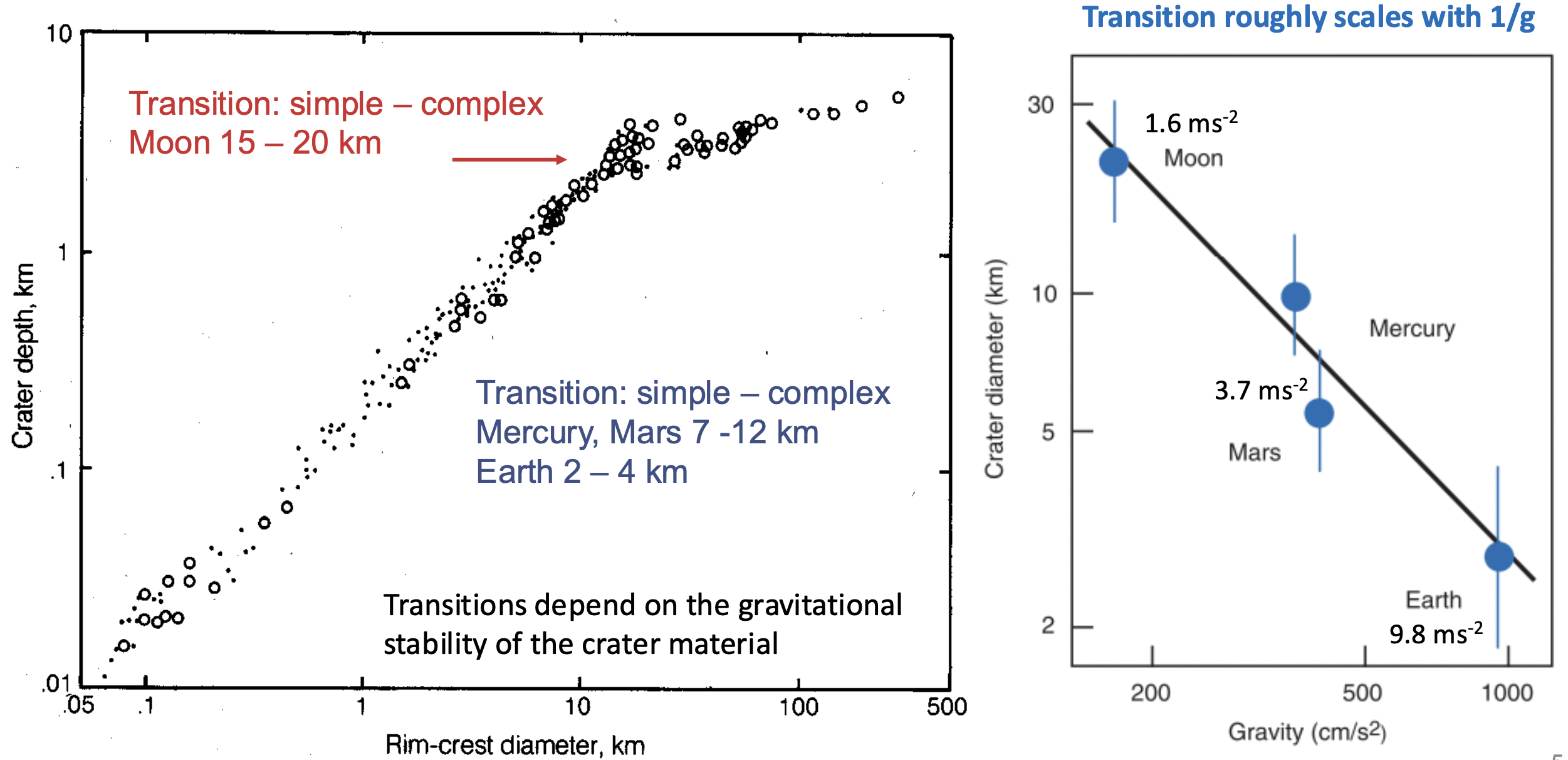
Crater Types
| Crater Feature | Simple | Transitional | Complex |
|---|---|---|---|
| Floor | Bowl shaped | Hummocky | Flat |
| Central Peak | No | No | Yes |
| Walls | Steep | Landslides | Terraces |
| Rim | Raised | Raised | Slightly raised |
| Ejecta | Yes — close to crater | Yes — close to crater | Yes — including secondary craters and rays |
Simple Craters
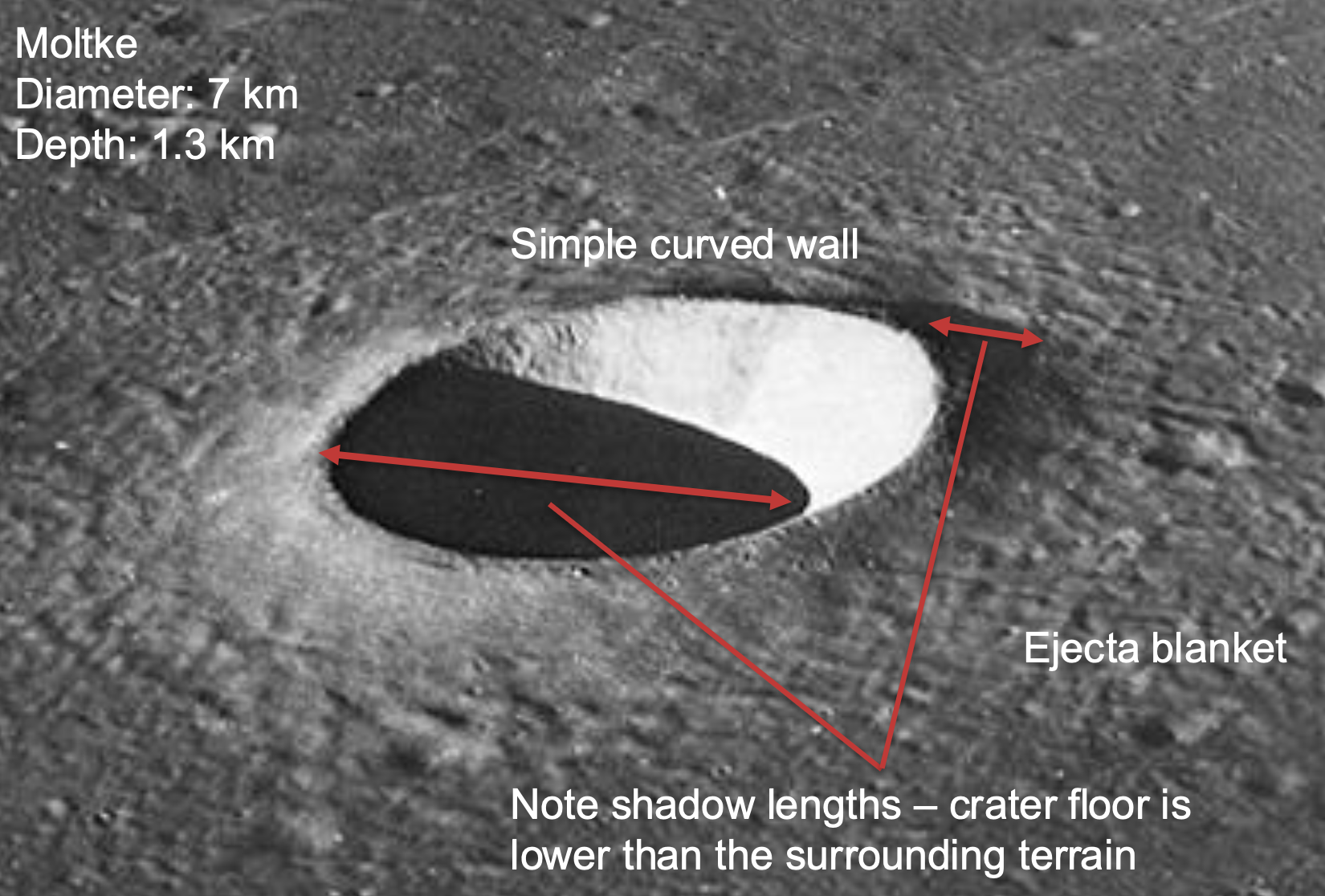
Simple craters are basically a bowl that is deeper then the surroundings with a raised rim. The walls are not caved in and can therefore be very steep.
Complex Craters
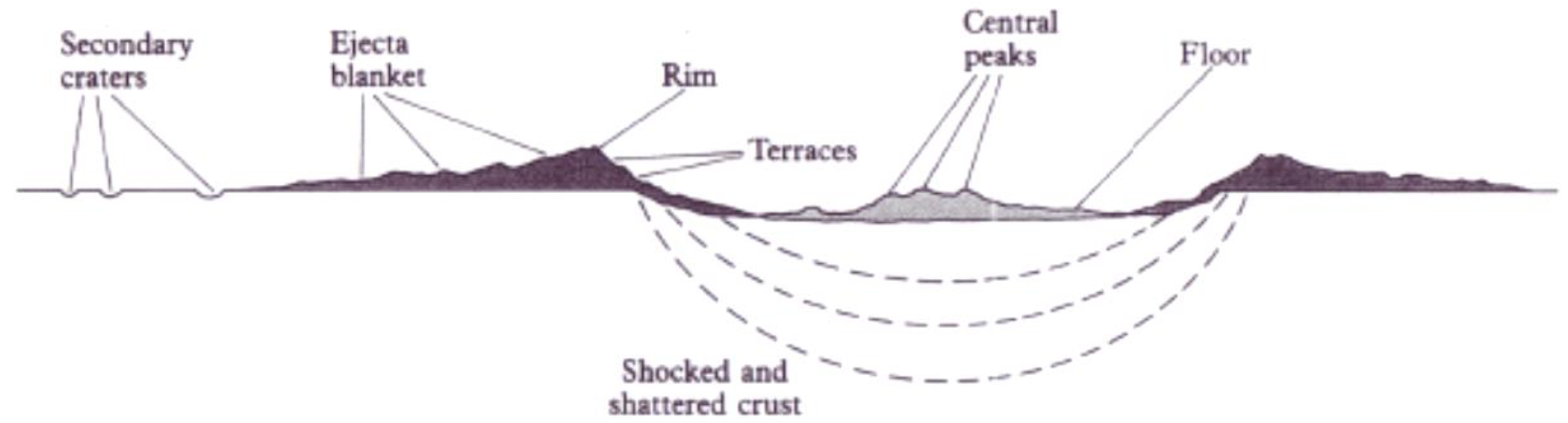
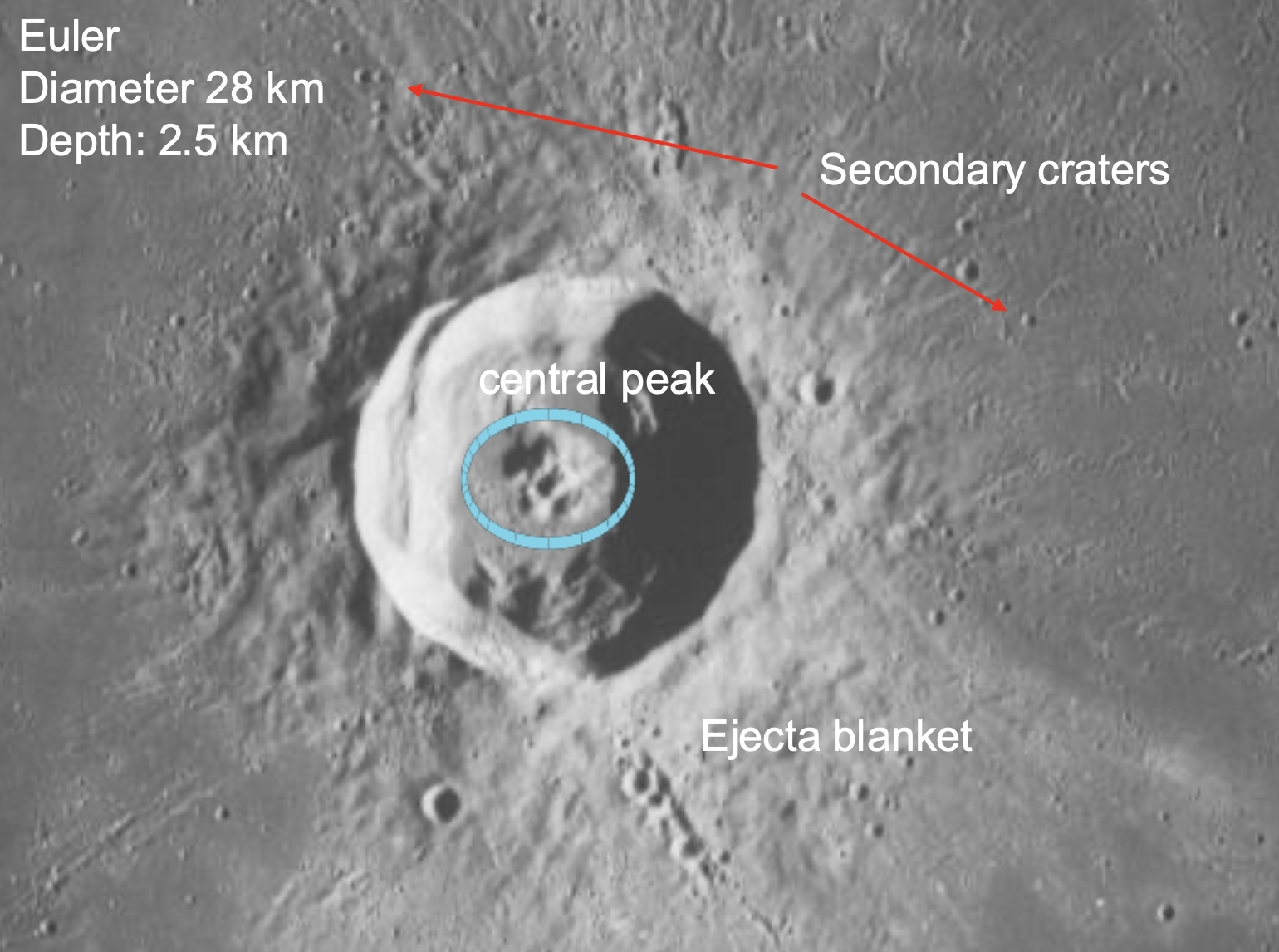
Bigger craters are often complex craters. These have a central peak or on even larger craters a peak-ring. These are formed when material flows back into the hole formed by the impact.
Also around the crater are secondary craters that are formed from ejected material.
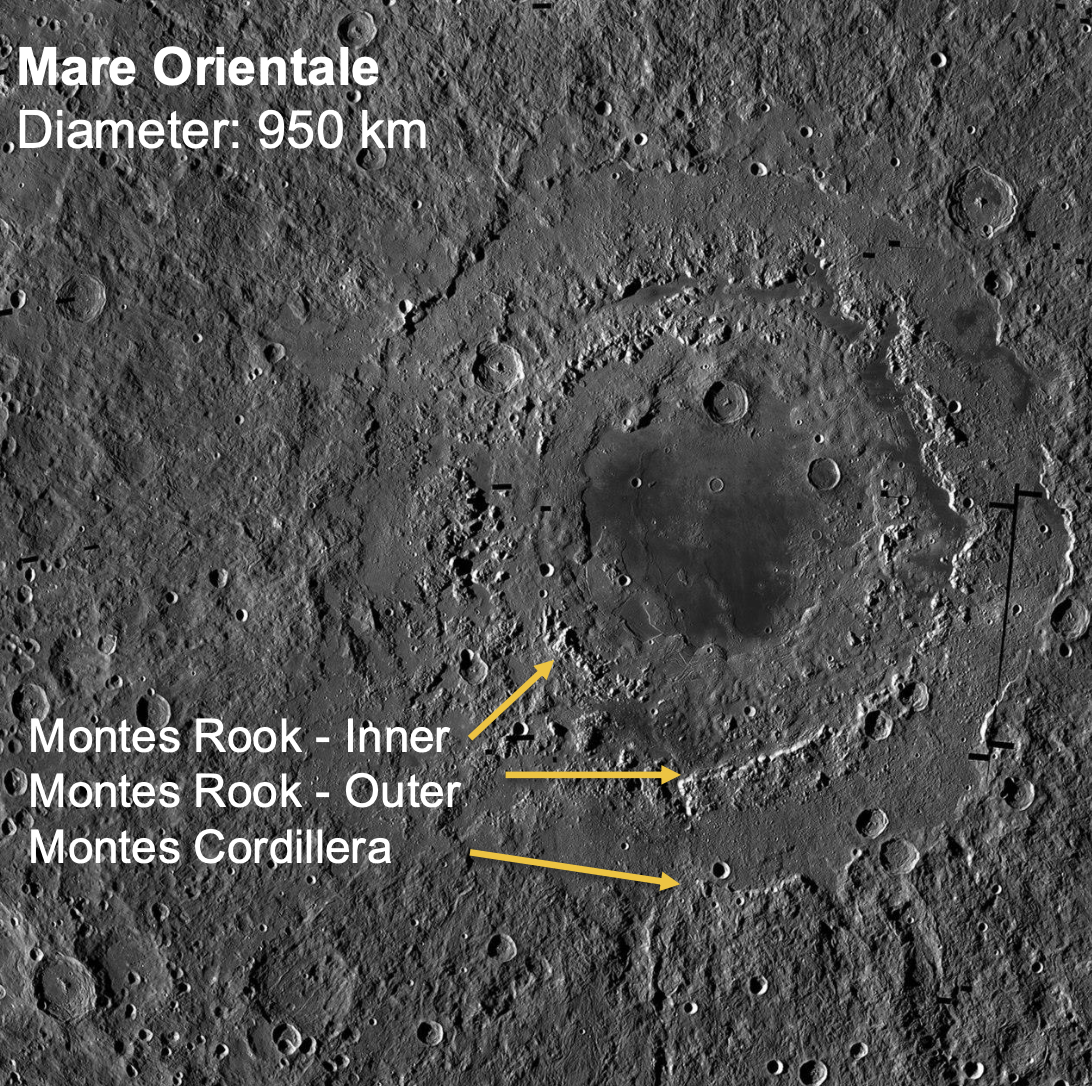
Even bigger impacts form multi-ring craters or even impact basins.
Direction of Impact
Nearly all craters are round and have no memory of impact direction. This comes from the speed with which the impact happens.
- Speed of impact:
- Asteroid: 10 - 40 km/s
- Comet: 60 km/s
- Speed of sound in rocks:
- P-wave speed: 6 km/s
- This is the maximum speed at which the rock can move out of the way.
This results in an impact at hypervelocity, the material is not moved aside, but the energy is high enough to explode the material and therefore form a circular crater.
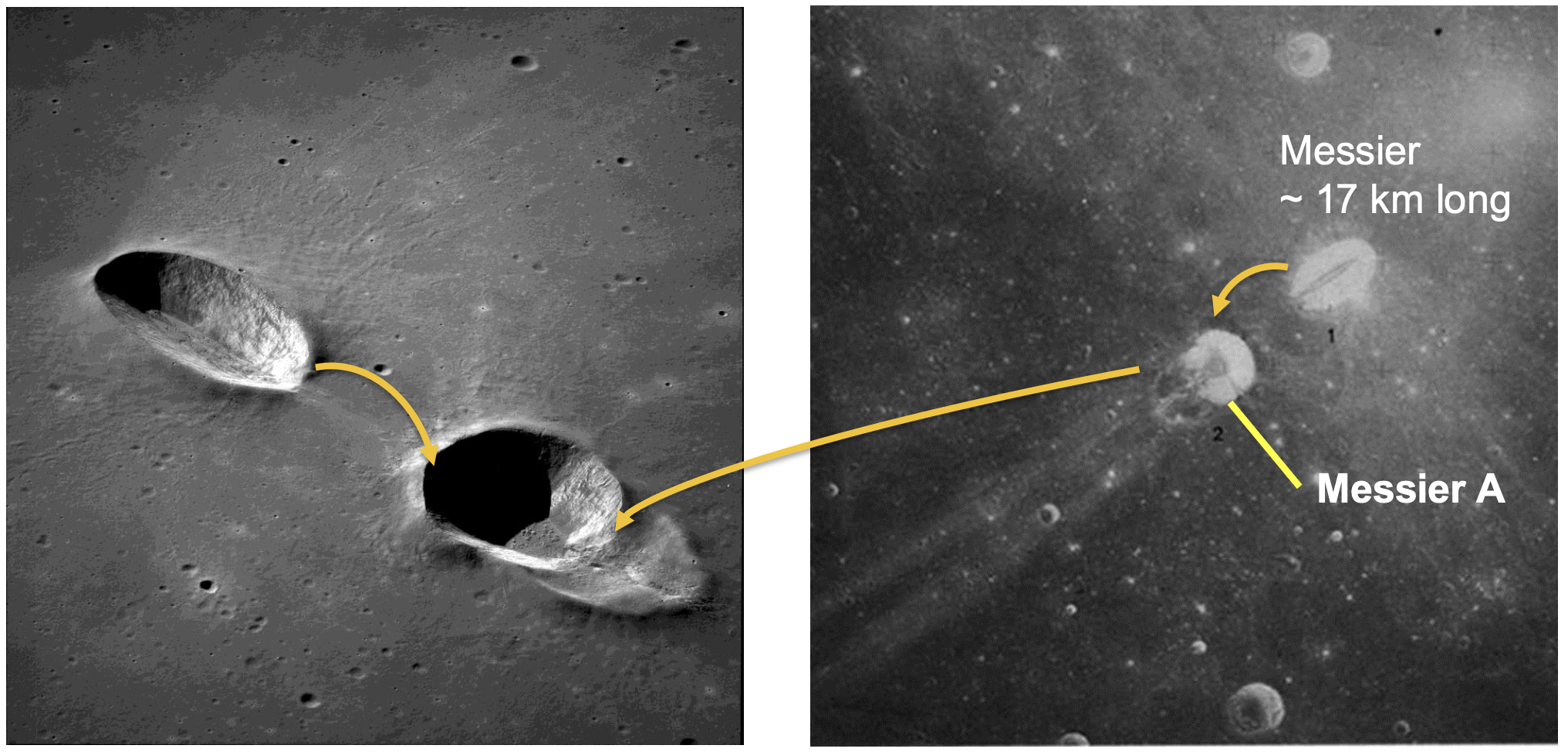
On really shallow impact angles (<10°) the ejector blanked can show the direction or the bottom of the asteroid sheers of and the top half makes a second crater.
Crater degradation
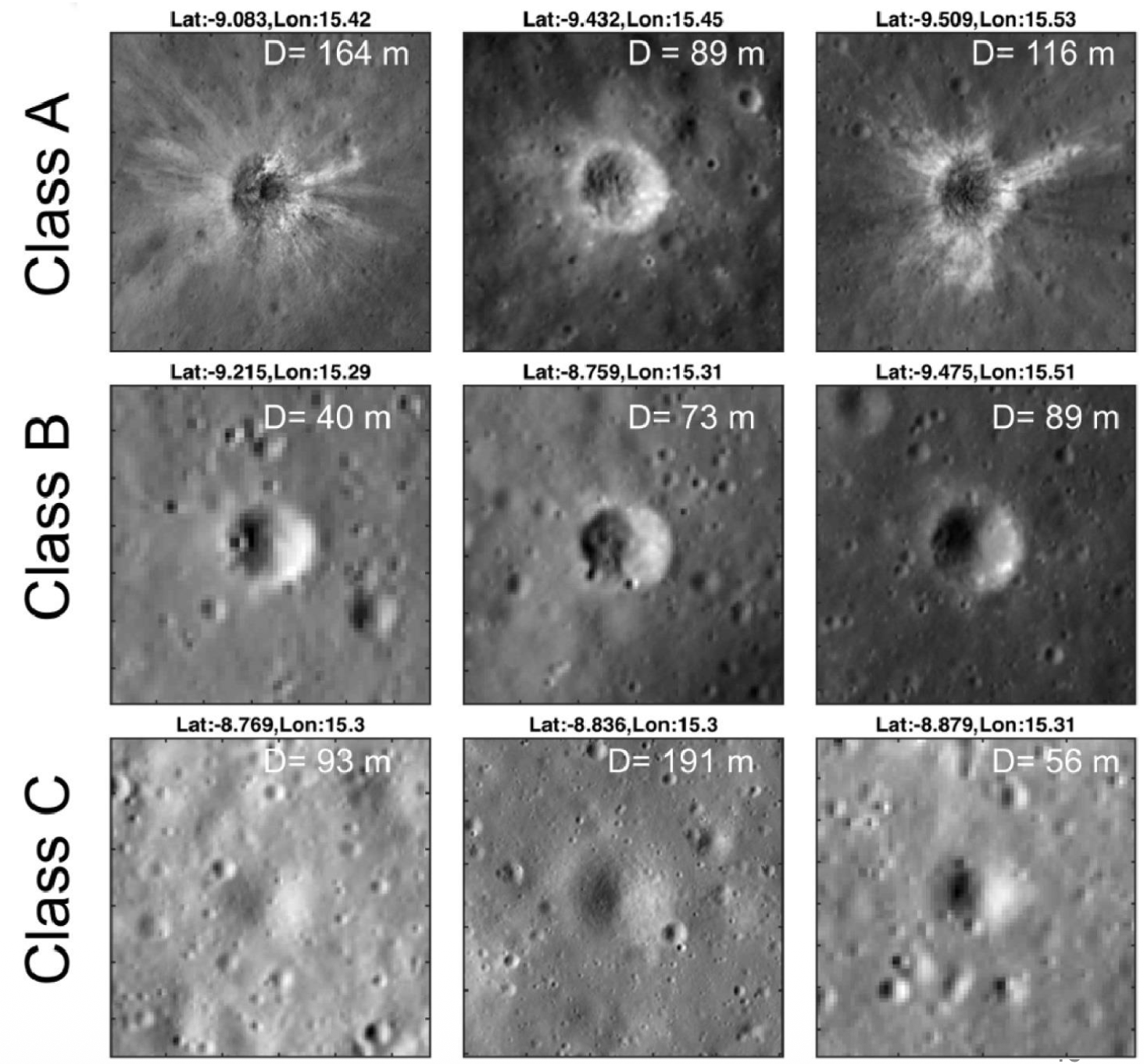
- Young craters
- very distinct features
- Older craters
- look 'eroded'
- much less distinct features
- outnumber young ones
- overprinted by other impacts or ejecta